

 English
 русский
API 16A — formally known as API Specification 16A, Specification for Drill-Through Equipment — is the globally recognized standard published by the American Petroleum Institute (API) that governs the design, manufacture, materials, testing, inspection, marking, and shipping of drill-through equipment used in oil and gas drilling operations. In plain terms, API 16A defines the mandatory requirements that blowout preventers (BOPs), drilling spools, hydraulic connectors, annular packing units, and related equipment must meet before they can be safely deployed at any wellhead.
For engineers, procurement specialists, drilling contractors, and regulatory bodies, understanding API 16A is non-negotiable. It directly governs well-control equipment — the last line of defense against catastrophic blowouts. This article provides an in-depth look at every key aspect of the standard, from scope and equipment classifications to pressure ratings, material requirements, testing protocols, and compliance considerations.
Content
- What Is API 16A? Scope and Purpose
- API 16A Pressure Ratings and Size Designations
- API 16A End Connections: Types and Dimensional Requirements
- API 16A Material Requirements
- API 16A Testing Requirements: Factory Acceptance Test (FAT) Protocol
- API 16A vs API 6A: Understanding the Differences
- API 16A Drilling Spools: Design and Function
- Temperature Ratings Under API 16A
- API 16A Marking Requirements
- API 16A and Related Standards: The Broader Well Control Framework
- Frequently Asked Questions (FAQ): API 16A
- Conclusion: Why API 16A Compliance Matters
What Is API 16A? Scope and Purpose
The API 16A standard is developed and maintained by the American Petroleum Institute and is now in its Fourth Edition (published April 2017, with subsequent errata and addenda including Addendum 2 (2025) and Errata 4 (2025)). It is also harmonized as an American National Standard (ANSI/API Specification 16A) and is closely aligned with the international standard ISO 13533, which makes it applicable across global drilling operations.
The primary purpose of API Specification 16A is to ensure the safe and functionally interchangeable use of drill-through equipment at the wellhead. It establishes the minimum acceptable requirements so that equipment from different manufacturers can interface reliably, reducing the risk of incompatibility failures during critical drilling operations.
Equipment Covered Under API 16A
According to the specification, API 16A is applicable to and establishes requirements for the following specific equipment:
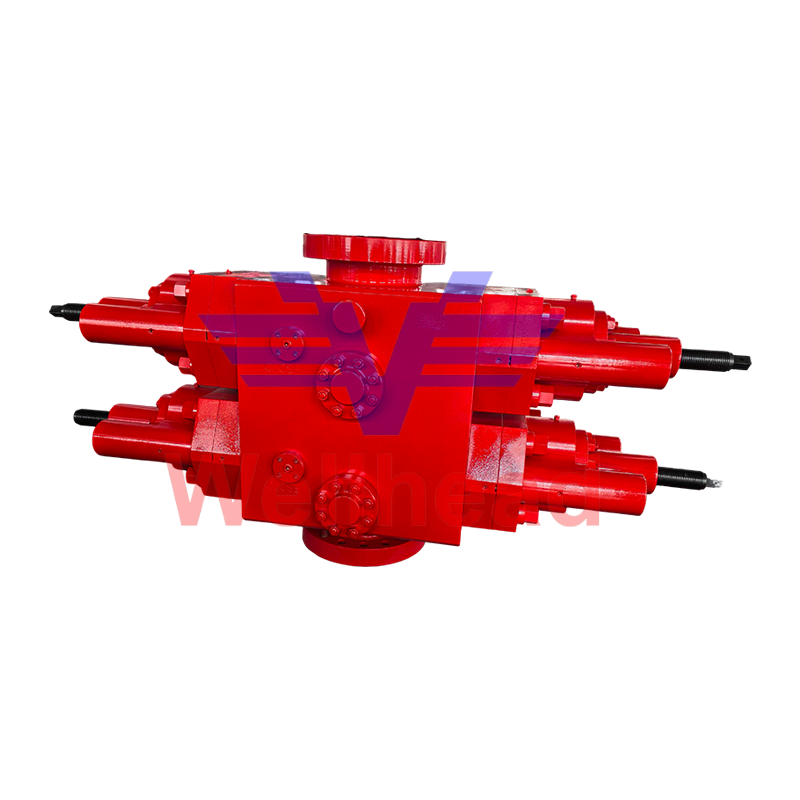
- Ram Blowout Preventers (BOPs) — including blind rams, pipe rams, shear rams, blind-shear rams, and variable bore rams
- Ram Blocks, Packers, and Top Seals — elastomeric sealing components within ram-type BOPs
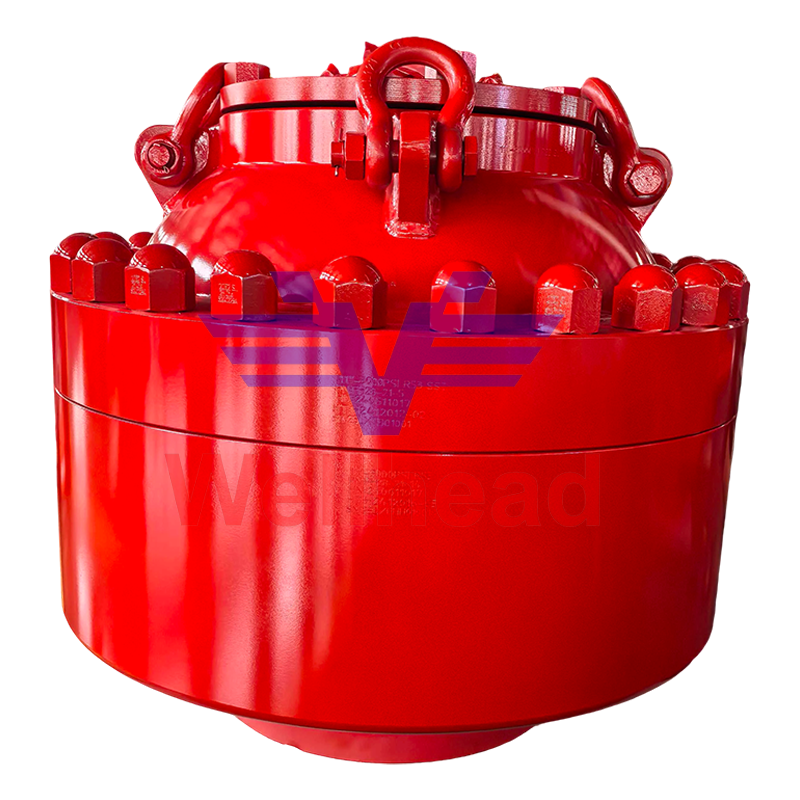
- Annular Blowout Preventers — spherical or bag-type preventers that seal around any shape in the wellbore
- Annular Packing Units — the elastomeric sealing elements inside annular BOPs
- Hydraulic Connectors — used to connect the BOP stack to the wellhead or LMRP
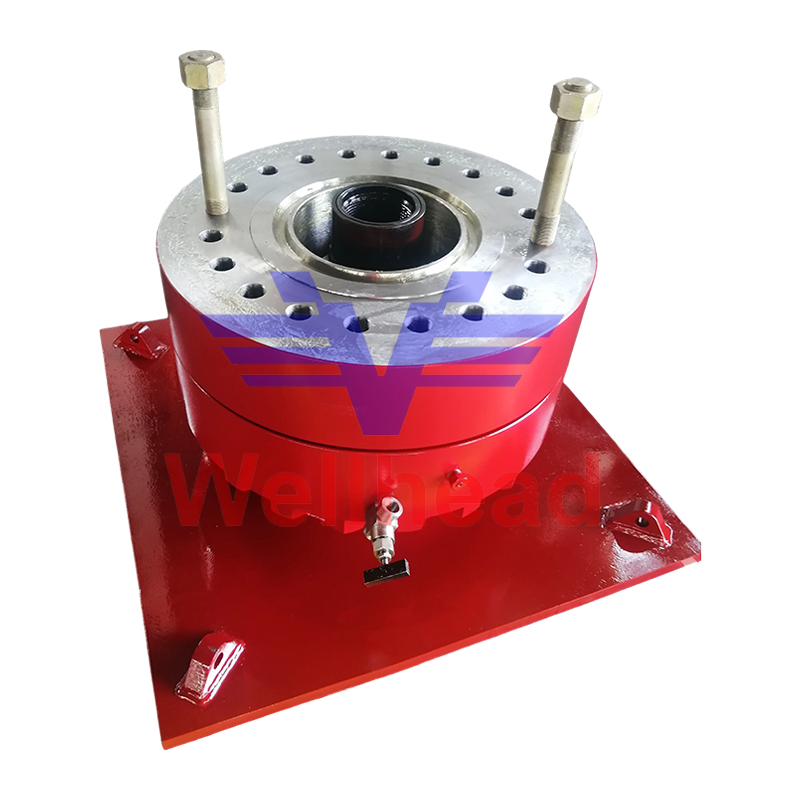
- Drilling Spools — connect the BOP to the wellhead and provide side outlets for choke and kill lines
- Adapters — transition pieces between equipment with different end-connection configurations
- Loose Connections and Clamps — fastening hardware for hub-type end connections
It is important to note that API 16A does not apply to field use or field testing of drill-through equipment. Repair and remanufacturing activities are covered by the separate standard API 16AR.
API 16A Pressure Ratings and Size Designations
One of the most fundamental aspects of API 16A compliance is adhering to standardized pressure and size designations. The specification defines rated working pressures (RWP) that equipment must be designed and tested to handle. These ratings ensure that the entire BOP stack operates within consistent, verifiable safety margins.
| Rated Working Pressure (RWP) | Typical Application | Hydrostatic Proof Test | Common Equipment |
| 2,000 psi | Shallow, low-pressure wells | 3,000 psi | Annular BOPs, Spools |
| 3,000 psi | Onshore medium-depth wells | 4,500 psi | Ram BOPs, Drilling Spools |
| 5,000 psi | Standard offshore applications | 7,500 psi | Ram BOPs, Hydraulic Connectors |
| 10,000 psi | High-pressure offshore / subsea | 15,000 psi | BOP stacks, Subsea connectors |
| 15,000 psi | Ultra-high-pressure deepwater | 22,500 psi | Deepwater BOPs, LMRP connectors |
| 20,000 psi | Next-generation HPHT applications | 30,000 psi | Specialized HPHT BOP systems |
Under API 16A, the lowest-rated working pressure component in an assembly determines the rated working pressure of the entire equipment string. For example, if a BOP body is rated at 15,000 psi but its end connections are rated at 10,000 psi, the entire assembly is classified as a 10,000 psi rated working pressure unit.
API 16A End Connections: Types and Dimensional Requirements
End connections are the physical interfaces by which API 16A equipment is joined to adjacent components. The specification defines two primary categories of end connections, each suited to different applications and offering distinct performance characteristics.
Flanged End Connections (Type 6B and 6BX)
Flanged connections per API 16A comply with the dimensional requirements of ISO 10423 (which is equivalent to API 6A). Type 6B flanges are used for lower pressure applications (typically 5,000 psi and below), while Type 6BX flanges are preferred for high-pressure applications. Ring-type joint (RTJ) gaskets — Types R, RX, and BX — are used in flanged connections to achieve a leak-tight metal-to-metal seal under high-pressure conditions.
Hub End Connections (Type 16B and 16BX)
Hub-type end connections are unique to API Specification 16A and offer several operational advantages over flanged connections. 16B hubs are used for standard pressure applications, while 16BX hubs are designed for rated working pressures of 5,000 psi and above. Clamps secure the hub connections and offer 360° rotational adjustability, allowing bolt access in confined spaces — a major benefit on crowded rig floors.
| Feature | API 16A Flanged (6B/6BX) | API 16A Hub Connection (16B/16BX) |
| Bolt Count | Multiple studs (8–20+ depending on size) | Only 4 bolts per clamp |
| Make-Up Speed | Slower — requires sequential torquing | Faster — fewer bolts, quick assembly |
| Orientation Flexibility | Fixed bolt pattern | 360° infinite adjustability |
| Weight & Size | Heavier and larger OD | More compact and lighter |
| Pressure Range | 2,000 – 20,000 psi | 2,000 – 20,000 psi |
| Common Use | Surface wellhead, general BOP | Subsea BOP stacks, space-limited rigs |
| Interchangeability | Compatible with API 6A equipment | API 16A clamps & hubs only |
API 16A Material Requirements
Material selection is one of the most critical aspects of API 16A compliance. The specification defines minimum mechanical property requirements for pressure-containing members based on designated material strength classes. These designations are identified by minimum yield strength and are shared with API 6A.
| Material Designation | Min. Yield Strength | Min. Tensile Strength | Notes |
| 36K | 36,000 psi | 70,000 psi | Fabricated equipment bodies only (low-stress) |
| 45K | 45,000 psi | 70,000 psi | Lower-pressure bodies and bonnets |
| 60K | 60,000 psi | 85,000 psi | General pressure-containing members, ≤10,000 psi |
| 75K | 75,000 psi | 95,000 psi | High-pressure equipment; API 16A requires 18% elongation for 75K material |
All material mechanical properties must be confirmed through destructive testing of a Qualification Test Coupon (QTC) taken from the same heat of steel and processed identically to the production part. Additionally, API 16A mandates compliance with NACE MR0175 hardness limits for sour-service applications, ensuring that equipment used in hydrogen sulfide (H₂S)-containing environments meets corrosion-resistance standards.
Welding requirements under API 16A are equally stringent. All welding procedures, welder qualifications, and weld inspections must conform to the specification's detailed requirements, which reference ASME Boiler and Pressure Vessel Code Section V and Section VIII as applicable.
API 16A Testing Requirements: Factory Acceptance Test (FAT) Protocol
Before any API 16A equipment leaves the manufacturer's facility, it must pass a rigorous Factory Acceptance Test (FAT). The FAT encompasses three primary testing phases that together verify the structural integrity and operational performance of the assembled equipment.
1. Drift Test
The drift test verifies that the bore of all API 16A equipment — including BOPs and drilling spools — meets the minimum bore diameter requirements. A drift mandrel of specified dimensions must pass completely through the equipment to confirm there are no obstructions that could prevent the passage of drill strings or other downhole tools.
2. Hydrostatic Proof and Pressure Tests
The hydrostatic proof test is the primary structural integrity test for API 16A equipment. Key requirements include:
- Test pressure is held for a minimum of 15 minutes after the pressure has stabilized and external surfaces have been thoroughly dried
- No visible leakage is the acceptance criterion — any seepage or weeping constitutes a failure
- The timing does not begin until the test pressure stabilizes within the manufacturer's specified range
- All ring gasket surface areas on each end of the body must be included in the test
For closed-preventer tests (sealing performance tests on BOPs), both low-pressure and high-pressure tests are required. Low-pressure tests are conducted at 200–300 psi with a minimum 10-minute hold after stabilization. High-pressure tests are conducted at the full hydrostatic proof test pressure. For ram BOPs equipped with ram locking systems, the ram lock must be engaged after the rams are closed, and operating pressure removed before the test, to confirm the lock's ability to hold pressure independently.
3. Hydraulic Operating System Tests
Each assembled BOP and hydraulic connector must pass a hydraulic operating system test at 1.5 times the rated working pressure of the hydraulic operating chamber. For hydraulic connectors, the test must also include a lock/unlock cycle test — typically a minimum of 6 full-stroke lock and unlock cycles at the manufacturer's recommended operating pressure — to verify reliable performance.
| Test Type | Test Pressure | Hold Time | Acceptance Criterion |
| Hydrostatic Proof Test | 1.5 × RWP | Min. 15 minutes | No visible leakage |
| Closed Preventer – Low Pressure | 200–300 psi | Min. 10 minutes | No visible leakage |
| Closed Preventer – High Pressure | Full proof test value | Min. 10 minutes | No visible leakage |
| Hydraulic Operating System | 1.5 × Operating RWP | As specified | No leakage; full operation |
| Drift Test | N/A (mechanical) | N/A | Mandrel passes through full bore |
API 16A vs API 6A: Understanding the Differences
A common source of confusion in the industry is the relationship between API 16A and API 6A. While both specifications govern equipment at the wellhead, they cover fundamentally different product categories and serve distinct functions in the drilling and production lifecycle.
| Criteria | API 16A | API 6A |
| Primary Focus | Drill-through / well control equipment | Wellhead and Christmas tree equipment |
| Primary Equipment | BOPs, drilling spools, annulars | Casing heads, tubing heads, gate valves |
| Operational Phase | Drilling & well control operations | Production and completion operations |
| PSL System | No PSL tiering (single requirement level) | PSL 1 through PSL 4 tiering |
| End Connection Types | 16B/16BX hub connections + 6B/6BX flanges | 6B and 6BX flanges only |
| ISO Equivalent | ISO 13533 | ISO 10423 |
| Elastomer Requirements | Extensive (packing elements, BOP seals) | Limited (primarily ring gaskets) |
| Repair Standard | API 16AR | API 6AR |
Despite their differences, API 16A and API 6A equipment are routinely used together at the wellhead. Drilling spools and adapter spools conforming to both standards — using 6B/6BX flanges on one end and 16B/16BX hubs on the other — are common in surface and subsea applications. In these cases, the equipment must meet the requirements of both specifications for their respective end connections.
API 16A Drilling Spools: Design and Function
API 16A drilling spools are pressure-containing components installed between the BOP stack and the wellhead. They perform a critical function: providing the side outlets through which choke and kill lines are connected to manage wellbore pressure during drilling operations. Without drilling spools, the circulation of drilling mud during BOP activation and well control operations would be impossible.
Key design characteristics of API 16A drilling spools include a cylindrical bore that must match the BOP stack bore, top and bottom end connections (flanged or hub), and side outlet connections for choke and kill manifolds. The side outlet connections can differ from the main end connections in both size and pressure rating, but the overall spool working pressure is determined by the lowest-rated component.
Drilling spools designed and manufactured in accordance with API Spec 16A must also conform to NACE MR0175 for sour service environments, and end connections can be configured as API 6A flanges, API 16A clamp hub connections, or WECO union types depending on the application requirements.
Temperature Ratings Under API 16A
API 16A defines temperature service classifications for both metallic and nonmetallic (elastomeric) components. These ratings are essential for ensuring equipment integrity across the range of environmental and wellbore conditions encountered in global drilling operations.
| Temperature Rating | Temperature Range (Metallic) | Typical Application |
| K (Cold) | -75°F to +180°F (-60°C to +82°C) | Arctic and sub-arctic drilling |
| L (Low) | -50°F to +180°F (-46°C to +82°C) | Cold-climate onshore operations |
| P (Standard) | -20°F to +250°F (-29°C to +121°C) | General oilfield use worldwide |
| S (High) | -20°F to +350°F (-29°C to +177°C) | High-temperature / HPHT applications |
| T (HPHT) | -20°F to +450°F (-29°C to +232°C) | Ultra-HPHT deepwater wells |
Nonmetallic components — including BOP packing elements, ram seals, and annular packing units — carry separate elastomeric compound marking codes that identify their temperature and chemical compatibility ratings. These codes must be marked on the component and documented in the equipment's traceability records under API 16A requirements.
API 16A Marking Requirements
API 16A specifies mandatory marking requirements to ensure full traceability of equipment throughout its lifecycle. Equipment markings must be applied to the body and must include the following information, as applicable:
- Manufacturer's name or trademark
- Equipment type designation (e.g., RAM BOP, ANNULAR BOP)
- API size designation (nominal bore size)
- Rated working pressure in psi
- Temperature rating (K, L, P, S, or T)
- Serial number for traceability
- Elastomeric compound marking code (for nonmetallic components)
- API Monogram (if the manufacturer is a licensed API Monogram Program participant)
The API Monogram Program is a voluntary but widely required certification that demonstrates a manufacturer's quality management system has been audited and found compliant with API 16A requirements. Products bearing the API Monogram provide operators with a recognized assurance of quality and conformance to the specification.
API 16A and Related Standards: The Broader Well Control Framework
API 16A does not operate in isolation. It is one component of a comprehensive family of standards that together govern the design, operation, maintenance, and repair of well-control systems. Understanding how API 16A relates to these standards is essential for engineers and operators responsible for full-stack BOP system compliance.
- API 16A — Equipment manufacture and testing (BOPs, spools, connectors)
- API 16AR — Repair and remanufacturing of API 16A drill-through equipment
- API 16C — Choke and kill equipment (manifolds, hoses, and flexible lines)
- API 16D — Control systems for drilling well-control equipment
- API 6A — Wellhead and Christmas tree equipment (production phase)
- API 17D — Subsea wellhead and Christmas tree equipment
- API RP 53 — Blowout prevention equipment systems for drilling wells
- ISO 13533 — International equivalent of API 16A
Frequently Asked Questions (FAQ): API 16A
Q: What does API 16A stand for and what does it cover?
API 16A stands for American Petroleum Institute Specification 16A. It is the specification for drill-through equipment used in oil and gas drilling, covering blowout preventers, annular BOPs, packing units, drilling spools, hydraulic connectors, adapters, clamps, and loose connections. It governs performance, design, materials, testing, inspection, welding, marking, handling, storing, and shipping of all covered equipment.
Q: What is the current edition of API 16A?
The current edition is the Fourth Edition, originally published in April 2017. It has been updated through subsequent errata and addenda, including Addendum 2 (2025) and Errata 4 (2025), and was reaffirmed as API Spec 16A (R2023) without technical changes in 2023.
Q: What is the difference between API 16A and ISO 13533?
API 16A and ISO 13533 are technically harmonized standards covering the same equipment. ISO 13533 is the international standard published by the International Organization for Standardization, while API 16A is the American Petroleum Institute's equivalent. The Fourth Edition of API 16A is a modified adoption of ISO 13533, making them effectively interchangeable for compliance purposes on most international projects, though specific project or regulatory requirements may stipulate one or the other.
Q: Does API 16A apply to field use and field testing of BOPs?
No. API 16A explicitly does not apply to field use or field testing of drill-through equipment. Field operations, testing intervals, and operational procedures for BOP systems are governed by other standards, primarily API RP 53. API 16A applies only to the manufacture, testing, and shipment of equipment from the manufacturer.
Q: What is the advantage of API 16A hub connections over flanged connections?
API 16A hub connections (Types 16B and 16BX) require only four bolts to form a complete joint, making them significantly faster to assemble and disassemble than flanged connections with multiple studs. They are also smaller, lighter, and offer 360° rotational adjustability, which is invaluable in space-constrained environments such as subsea BOP stacks. Despite these advantages, both connection types offer equivalent pressure ratings under the specification.
Q: What is required to obtain the API Monogram for API 16A equipment?
To obtain the API Monogram license for API 16A equipment, a manufacturer must apply to the American Petroleum Institute and undergo a quality management system audit at their manufacturing facility. The facility must demonstrate that its quality management system, manufacturing processes, testing capabilities, documentation controls, and personnel qualifications all meet the requirements specified in API 16A. Licensed manufacturers must undergo periodic re-audits to maintain their licensure.
Q: What standard covers the repair of API 16A equipment?
Repair and remanufacturing of API 16A drill-through equipment is covered by API 16AR, Standard for Repair and Remanufacturing of Drill-through Equipment. This standard was separated from the parent specification in the Fourth Edition of API 16A to provide more detailed and focused requirements for repair service levels, equipment traceability, and quality control during the repair process.
Conclusion: Why API 16A Compliance Matters
API 16A is far more than a technical document — it is the engineering foundation upon which safe drilling operations worldwide are built. Every BOP, drilling spool, hydraulic connector, and annular preventer that protects a wellbore during drilling owes its design, material quality, and performance verification to the requirements codified in this specification.
For operators, procurement teams, and regulators, specifying API 16A compliant equipment — particularly equipment bearing the API Monogram — provides a verified assurance that the equipment has been designed, manufactured, and tested to meet the industry's established minimum safety and performance requirements. For manufacturers, maintaining API 16A certification is a prerequisite for participation in the global drilling equipment market.
As drilling operations continue to push into increasingly challenging environments — ultra-deepwater, high-pressure high-temperature (HPHT) reservoirs, and arctic locations — the role of API 16A and its evolving requirements will only grow in importance. Staying current with the latest edition, including all active addenda and errata, is an ongoing obligation for all stakeholders in the well-control equipment supply chain.
 + 86-0515-88429333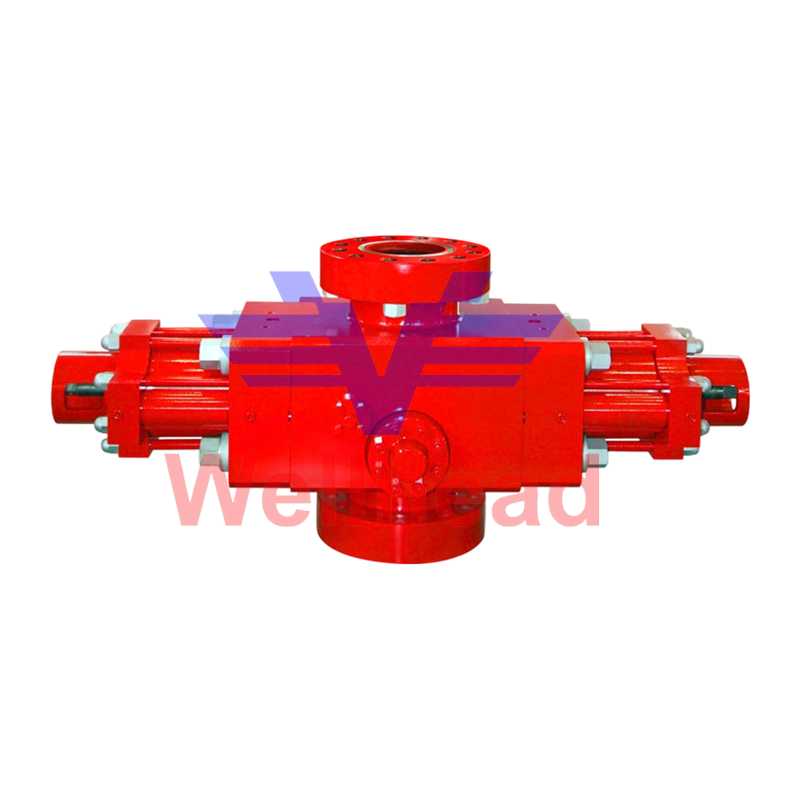

 CONTACT US
