

 English
 русский
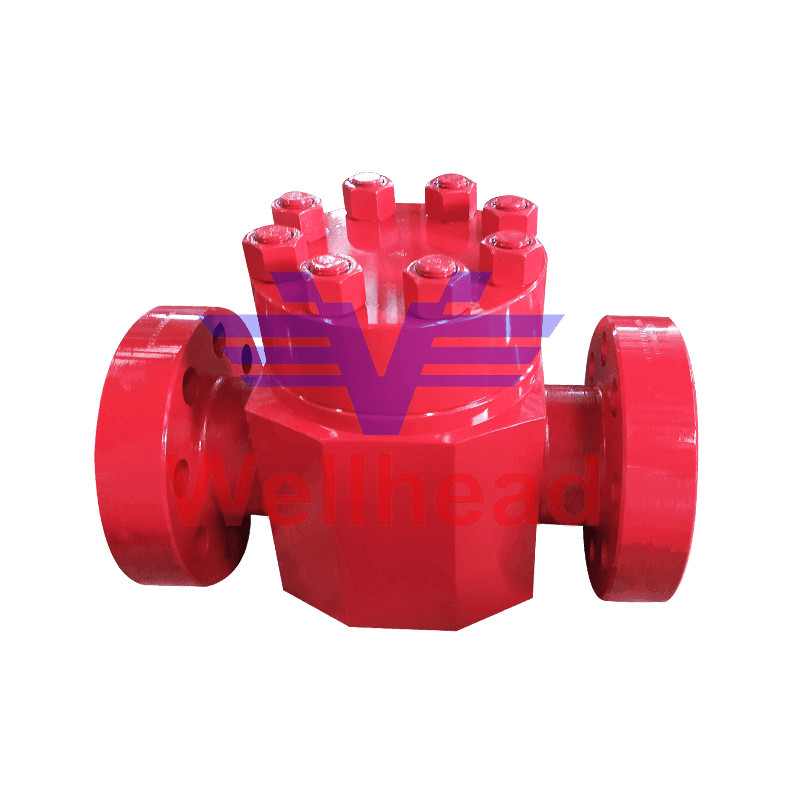
A casing head is a robust, pressure-rated fitting installed at the surface of an oil or gas well that supports and seals the outermost string of casing pipe. It forms the bottommost component of the wellhead assembly, providing a structural foundation for all equipment stacked above it while preventing fluids and gases from escaping the annular space between casing strings.
In the upstream oil and gas industry, well integrity is everything. From the moment a well is drilled to the point it is brought into production, every component of the wellhead must perform flawlessly under extreme pressure and temperature conditions. The casing head — sometimes called a braden head — sits at the very heart of this system, quietly bearing the mechanical and hydraulic loads that make safe, efficient production possible.
This article explores everything operators, engineers, and procurement specialists need to know about casing heads: their design, function, types, material standards, installation procedures, maintenance requirements, and how they compare with related wellhead components.
Content
- Understanding the Role of a Casing Head in Wellhead Systems
- Types of Casing Heads: A Detailed Comparison
- Key Components of a Casing Head Assembly
- Material Standards and Pressure Ratings for Casing Heads
- How Is a Casing Head Installed? Step-by-Step Process
- Casing Head vs. Casing Spool vs. Tubing Head: What's the Difference?
- Casing Head Inspection, Maintenance, and Common Failure Modes
- How to Select the Right Casing Head for Your Well
- Frequently Asked Questions About Casing Heads
- Conclusion: The Casing Head as the Cornerstone of Well Integrity
Understanding the Role of a Casing Head in Wellhead Systems
A wellhead is a complex assembly of equipment that sits on top of a drilled well at the surface. It controls the flow of oil, gas, and water produced from the reservoir, and it provides a platform for intervention tools, pressure gauges, and production chokes. The casing head is always the first — and lowest — element of this assembly.
Once the conductor pipe is set and cemented, the casing head housing is either welded onto the surface casing or threaded onto it. All subsequent casing strings — intermediate casings, production casing — are then suspended from hangers that land inside the casing head or the spools above it. The casing head therefore carries the full tensile weight of these suspended strings, which can amount to hundreds of thousands of pounds in deep wells.
Primary Functions of a Casing Head
- Structural support: Suspends the weight of multiple casing strings and prevents them from moving downward under their own mass or formation pressure.
- Pressure containment: Seals the annular space between the surface casing and inner strings so formation fluids cannot migrate to surface uncontrolled.
- Equipment connection point: Provides flanged or threaded outlets for the attachment of casing spools, tubing heads, blowout preventers (BOPs), and Christmas tree equipment.
- Annulus access: Side outlets on the casing head allow operators to monitor annular pressure, circulate fluids, or inject kill mud in emergency situations.
- Safe drilling environment: During drilling, the casing head is the landing point for the BOP stack, which is the last line of defense against a well kick or blowout.
Types of Casing Heads: A Detailed Comparison
Not all casing heads are the same. Design engineers select a specific type based on casing size, wellbore pressure rating, environmental conditions, and regulatory requirements. The table below outlines the most common types used across the industry.
| Type | Connection Method | Pressure Rating | Best Application | Key Advantage |
| Slip-On Welded | Welded to casing pipe | Up to 15,000 psi | High-pressure wells, deep formations | Maximum structural integrity |
| Threaded | API thread connection | Up to 5,000 psi | Shallow, low-pressure wells | Fast installation, lower cost |
| Mandrel Casing Head | Integral with casing string | Up to 20,000 psi | Deepwater, HPHT wells | No field welding required |
| Compact / Unitized | Combined head and spool | Up to 10,000 psi | Space-limited platforms | Reduced height and weight |
| Subsea Casing Head | Welded / Integral | Up to 15,000 psi | Offshore, seabed-installed wells | Designed for ROV operation |
Slip-On Welded Casing Head: The Industry Standard
The slip-on welded casing head is by far the most widely used design in onshore operations. After the surface casing is run and cemented, the casing head housing is slipped over the top of the pipe and welded in place using certified welding procedures. Side outlets are typically provided in sizes of 2-1/16 inch or 2-9/16 inch, and the top flange connects directly to the BOP stack or the next spool.
Because the weld provides a metallurgical bond — not just a mechanical seal — this type of casing head offers unmatched reliability in high-pressure, high-temperature (HPHT) environments.
Mandrel Casing Head for HPHT Operations
In ultra-deep wells and HPHT plays, the mandrel casing head eliminates field welding risks entirely. Here, the housing is machined directly into the top joint of the surface casing before the string is run downhole. When the casing is cemented and the top joint is cut off at the designated height, the casing head is ready — fully integrated, mill-quality, and traceable to original material certification.
Key Components of a Casing Head Assembly
A casing head is not a single machined block — it is an engineered assembly made up of several interdependent components:
1. Casing Head Housing
The main body of the casing head, typically forged from low-alloy carbon steel or corrosion-resistant alloys (CRA) such as 4130 or 4140 steel. The housing features a bore that matches the outer diameter of the casing, a locking groove or bowl profile to land the next casing hanger, side outlet ports, and a top flange rated to API or ASME standards.
2. Casing Hanger
A casing hanger is a mandrel or slip-type device that lands inside the casing head housing to support the weight of the inner casing string. Slip-type hangers grip the casing via hardened slip segments; mandrel hangers use a machined shoulder. The hanger also carries a packoff seal that isolates annular pressures.
3. Packoff / Annular Seal
The packoff is a pressure-energized elastomeric or metal-to-metal seal assembly positioned above the casing hanger. It forms a gas-tight barrier between the casing hanger and the casing head body, preventing annular gas migration — one of the most common causes of surface casing vent flow (SCVF) and a major regulatory concern in many jurisdictions.
4. Lockdown Screws and Neck Ring
Lockdown screws are threaded fasteners that engage the outside of the casing hanger to prevent uplift caused by casing thermal expansion or pressure surges. A neck ring provides an additional positive stop to prevent the hanger from being pushed upward out of the housing.
Material Standards and Pressure Ratings for Casing Heads
The selection of materials for a casing head is governed by a combination of industry standards and site-specific well conditions. The two dominant international standards that govern casing head design and manufacturing are:
- API 6A (ISO 10423): Wellhead and Christmas tree equipment standard covering casing heads, casing spools, tubing heads, and gate valves. Defines pressure classes of 2,000 / 3,000 / 5,000 / 10,000 / 15,000 / 20,000 psi and material classes from AA (general service carbon steel) to HH (sour service, low-temperature CRA).
- NACE MR0175 / ISO 15156: Governs sulfide stress cracking (SSC) resistance for equipment used in sour service (H₂S-containing) environments. Wells with hydrogen sulfide require casing heads manufactured from SSC-resistant alloys and heat-treated to strict hardness limits.
| API 6A Pressure Class | Working Pressure (psi) | Typical Well Type | Common Material Class |
| 2,000 | 2,000 psi | Shallow gas / water injection | AA |
| 5,000 | 5,000 psi | Mid-depth oil production | AA / BB |
| 10,000 | 10,000 psi | Deep onshore / offshore wells | DD / EE |
| 15,000 | 15,000 psi | HPHT exploration wells | EE / FF / HH |
| 20,000 | 20,000 psi | Ultra-deepwater / HPHT | HH (full CRA) |
How Is a Casing Head Installed? Step-by-Step Process
Proper installation of the casing head is critical to wellhead integrity for the entire life of the well. Below is the typical sequence for a slip-on welded casing head:
- Surface casing cementing: The surface casing is run to its programmed depth and cemented with returns to surface. Cement is allowed to cure to the required compressive strength before proceeding.
- Casing nipple up: The top of the surface casing is cut to the correct height above the cellar floor using a pipe cutter or cutting torch, leaving a clean, square shoulder for welding.
- Housing placement: The casing head housing is slipped over the casing stub, leveled, and aligned with the well centerline.
- Weld execution: A certified welder performs the root pass, hot pass, and cap pass in accordance with an approved welding procedure specification (WPS). Preheat and interpass temperature requirements are strictly followed.
- Pressure testing: The completed weld is pressure-tested to 1.5× the working pressure rating of the casing head using water or inert gas to confirm seal integrity before drilling resumes.
- BOP connection: The BOP stack is flanged up to the top of the casing head and function-tested prior to drilling out the shoe.
Casing Head vs. Casing Spool vs. Tubing Head: What's the Difference?
A common source of confusion in the field is the difference between a casing head, a casing spool, and a tubing head. While all three are wellhead components, they serve distinct purposes:
| Component | Position in Stack | Connected To | Primary Function |
| Casing Head | Lowest / first | Surface casing (welded) | Support & seal surface/intermediate casing; base for BOP |
| Casing Spool | Middle | Flanged on top of casing head | Suspend intermediate / production casing strings |
| Tubing Head | Uppermost (below tree) | Flanged on top of uppermost casing spool | Support tubing string; primary seal for produced fluids |
In summary: the casing head is permanently attached to the well by welding; the casing spool and tubing head are bolted up using ring joint (RJ) flanges and can be removed and replaced during workover operations.
Casing Head Inspection, Maintenance, and Common Failure Modes
Because the casing head cannot be removed once welded, its condition must be proactively monitored throughout the life of the well. Inspection programs typically include:
Routine Monitoring
- Regular pressure reading of annular outlets to detect SCVF or sustained casing pressure (SCP)
- Visual inspection of the weld zone for corrosion, coating damage, or mechanical impact
- Flange bolt torque verification after thermal cycling events
- Leak detection surveys using portable gas detectors at side outlets and flange faces
Common Failure Modes of Casing Heads
- Weld cracking: Caused by hydrogen embrittlement, thermal stress, or improper preheat during installation. Often detectable with magnetic particle or dye penetrant testing (MPI/DPI).
- Packoff seal degradation: Elastomeric seals harden or extrude over time, especially in HPHT service. Metal-to-metal seals offer longer service life in extreme conditions.
- Corrosion of side outlets: Outlet valves that remain closed for long periods can suffer internal corrosion or scale buildup, leading to valve failure when the outlet is needed for an emergency kill operation.
- Lockdown screw backing out: Vibration or thermal cycling can cause lockdown screws to lose torque, allowing the casing hanger to shift and disrupt annular sealing.
How to Select the Right Casing Head for Your Well
Selecting the correct casing head requires balancing engineering requirements with budget and operational constraints. Use the following criteria as a starting framework:
- Determine design pressure: Use the maximum anticipated surface pressure (MASP) of all annuli, plus a safety factor, to select the appropriate API 6A pressure class.
- Evaluate the fluid environment: H₂S, CO₂, chlorides, and high-temperature brines all dictate material class selection and may require CRA or NACE-compliant alloys.
- Match bore size to casing OD: The casing head bore must accommodate both the surface casing stub and the subsequent casing strings that will be run through it.
- Define hanger bowl requirements: Select the correct bowl profile based on whether slip hangers or mandrel hangers will be used for intermediate and production casing.
- Consider environmental and regulatory requirements: Offshore wells, Arctic service, and high-seismic regions impose additional design codes that may affect casing head configuration.
Frequently Asked Questions About Casing Heads
Q: What is the difference between a casing head and a braden head?
The term braden head is an older, colloquial name for the casing head, commonly used in North American oilfield culture. Both terms refer to the same device: the welded or threaded housing that supports the surface casing and anchors the wellhead stack. The term "casing head" is now the formally recognized designation per API 6A.
Q: Can a casing head be replaced after installation?
In most cases, a slip-on welded casing head cannot be replaced without cutting the surface casing below the weld and installing a new housing — a major and costly operation. This is why correct material selection and certified installation are critical from the outset. For some modular or threaded designs, replacement is more feasible, though still operationally complex.
Q: What causes sustained casing pressure (SCP) at the casing head?
SCP at the casing head is typically caused by a failed packoff or annular seal that allows formation gas to migrate upward through the cemented annulus and accumulate in the annular space. It can also result from poor primary cement isolation, casing corrosion creating micro-annuli, or damaged lockdown components. Sustained casing pressure must be reported to regulators in most jurisdictions and must be managed to prevent escalation.
Q: What are the side outlets on a casing head used for?
The side outlets on a casing head serve multiple functions: monitoring annular pressure during drilling, circulation of kill weight mud in a well control event, injection of corrosion inhibitors into the annulus, venting or bleeding down trapped annular gas, and connecting annular pressure gauges or transducers for permanent monitoring systems.
Q: How is a casing head pressure tested?
After installation, the casing head weld is hydrostatically tested to 1.5 times its rated working pressure using treated water or nitrogen. The test is held for a minimum period (commonly 15–30 minutes) with no visible leakage or pressure drop. Test records are documented and retained as part of the well's permanent integrity file, which regulators may audit at any time.
Q: Is a subsea casing head different from a surface casing head?
Yes. A subsea casing head is designed to be installed on the seabed, often at water depths of hundreds to thousands of meters. It must withstand external hydrostatic pressure in addition to internal well pressures, and all manipulation — including hanger landing, packoff setting, and annulus access — must be performed remotely via remotely operated vehicles (ROVs) or drilling tools lowered through the riser. Subsea casing heads are also designed for compatibility with subsea BOP stacks and subsea trees.
Conclusion: The Casing Head as the Cornerstone of Well Integrity
The casing head may not receive the same attention as a blowout preventer or a Christmas tree, but it is arguably the most structurally fundamental component of the entire wellhead system. Without a correctly designed, manufactured, and installed casing head, no amount of surface equipment can guarantee safe operations.
From the moment it is welded onto the surface casing stub, the casing head housing must endure decades of mechanical loading, thermal cycling, pressure fluctuations, and chemical exposure — all while providing an absolute barrier between the formation and the environment. Investing in the right casing head specification, sourcing from API 6A-licensed manufacturers, and executing installation to certified welding procedures are non-negotiable steps for any operator that takes well integrity seriously.
Whether you are equipping a shallow onshore gas well with a 2,000 psi threaded casing head or specifying a full CRA 15,000 psi mandrel assembly for a deepwater HPHT exploration well, understanding the engineering principles behind the casing head will always lead to better decisions and safer outcomes.
 + 86-0515-88429333

 CONTACT US
