

 English
 русский
A blowout during drilling is the loss of well control: formation fluid enters the wellbore, the barriers that should hold it back fail one after another, and oil or gas reaches the surface unrestrained. It is a chain of failures rather than one broken part, and the chain usually starts long before anyone on the rig floor notices.
That is why blowout well drilling is treated as a discipline rather than a risk to be insured against. What follows covers the term precisely, the four causes behind most events, the kick indicators that give a crew time to act, the equipment that forms the barrier stack, and the ratings and tests worth checking when you specify or purchase well control hardware.
Content
What Is a Blowout Well?
A blowout well is a well whose formation fluids can no longer be contained, so oil, gas, or brine escapes from the wellbore to the surface or into another formation. The difference between a kick and a blowout is one of scope, not kind: a kick is an influx you can still control, a blowout is an influx you cannot.
A kick begins when the pressure exerted by the drilling fluid drops below the pore pressure of the formation being drilled. If the crew shuts the well in, circulates the influx out, and restores the mud column, the event ends as a kick. If shut-in fails or is delayed, the same influx becomes a blowout, and the vocabulary shifts again depending on where the fluid goes.
| Term | What it describes | Common trigger |
|---|---|---|
| Kick | Formation fluid enters the wellbore while drilling but is still circulated out under control | Mud weight too low for pore pressure |
| Surface blowout | Uncontrolled flow reaches the rig floor, wellhead, and surface equipment | A kick that is not shut in, or a BOP that fails |
| Underground blowout | Flow escapes the wellbore into a shallower, weaker formation instead of reaching surface | Lost circulation or a failed casing shoe |
| Relief well | A directional well drilled to intercept the blowing well and kill it with heavy fluid | Surface capping is not possible or too slow |
Four Causes That Explain Most Blowouts in Drilling
Almost every blowout during drilling traces back to a mud column that no longer balances formation pressure, followed by one of four failure paths.
- Insufficient mud density. Mud is weighted too light for the formation being drilled, or it is diluted by the influx itself, so the hydrostatic head falls below pore pressure and the well starts to flow.
- Lost circulation. When mud escapes into a permeable or fractured zone, the annulus level drops, hydrostatic pressure drops with it, and a lower formation can feed the well. Lost circulation and kicks are so closely linked that many operators plan them as a single risk category.
- Abnormal formation pressure. A narrow margin between pore pressure and fracture gradient leaves little room between a kick and lost returns. A drilling window only a few tenths of a pound per gallon wide punishes any deviation in mud weight.
- Cementing and casing shoe failure. Cement that does not isolate the shoe, or a formation behind pipe, lets fluid channel upward — sometimes days after the cement job looked clean on the pump chart.
Equipment and procedure failures sit behind these four rather than beside them. An untested preventer, a pit volume nobody compared with the previous hour, or a slow decision to shut in each turns a textbook kick into a blowout.
Warning Signs: From Kick to Blowout
Kick indicators appear minutes to hours before a blowout, and every one of them is a change in a number the driller already watches.
| Indicator | What you see | Immediate response |
|---|---|---|
| Pit gain | Active pit volume rises while the pumps are off | Flow check, then shut in |
| Flow with pumps off | The well keeps flowing after circulation stops | Shut in and record pressures |
| Pressure and stroke change | Standpipe pressure falls while pump strokes rise | Confirm with a flow check before acting |
| Connection gas | Gas readings climb after each connection | Check mud weight and the gas trend |
| Light returns | Returns weigh less than the mud pumped in | Weigh returns and prepare a kill |
Incident reviews repeat the same lesson: crews that act on the first indicator contain the well, while crews that wait for confirmation take longer than the formation needs to unload the annulus.
The Barrier Stack: Equipment That Prevents a Blowout Well
Well control equipment is built as a stack of independent barriers, and each element has a job the others cannot do.
Blowout preventers (API 16A)
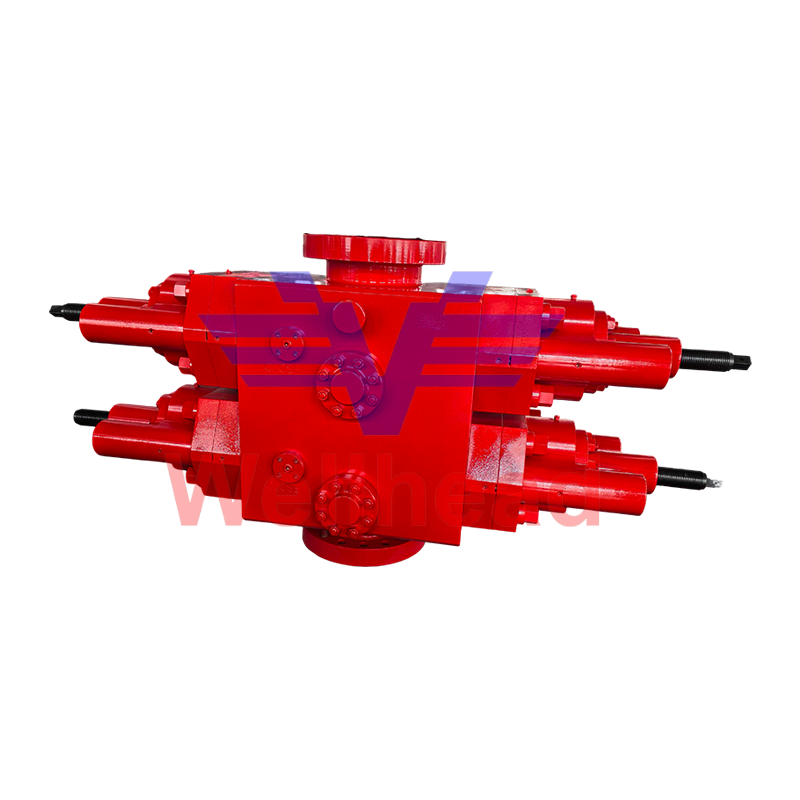
An annular preventer closes first, sealing around almost any shape in the hole and allowing pipe to be stripped under pressure. Ram preventers then take over: a single ram seals on one pipe size, while a double ram pairs pipe rams with blind or shear rams that cut the string and seal an open hole. The working pressure rating, not the paint colour, decides whether a preventer is acceptable for a given well.
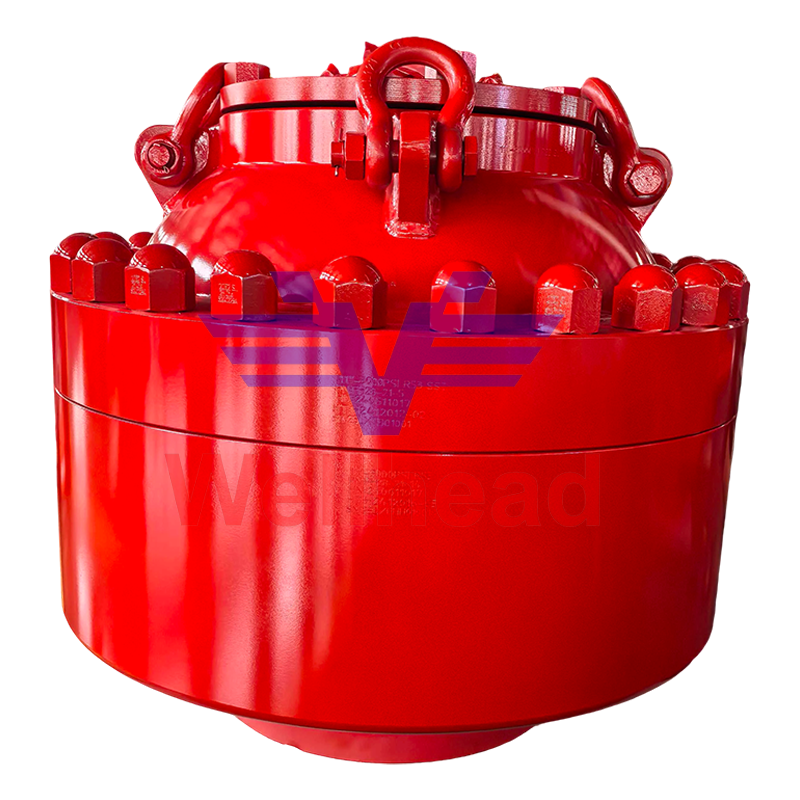 API 16A Annular Blowout Preventer for Well ControlAnnular-seal BOP shown as the first sealing barrier in a well-control stack, with sealing, durability, and equipment-compatibility details.View Product →
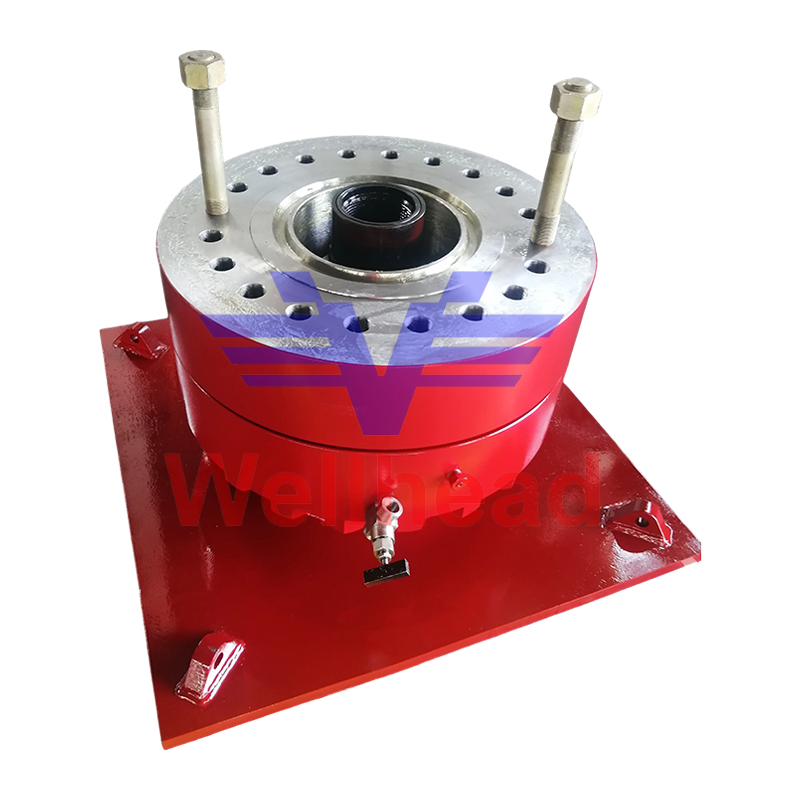
A preventer is only worth its nameplate rating once it has been proved, which is where the test stump earns its place. A properly rated BOP test stump lets a rig verify the stack at full pressure before it is needed rather than after, and it also protects the stack from damage during repeated untested cycles.
Choke and kill manifolds (API 16C)
Once the well is shut in, the choke manifold becomes the instrument used to bring it back under control: it holds backpressure on the annulus while the influx is circulated out at a controlled rate. A kill manifold provides the parallel path for pumping heavy fluid into the well. Both must handle abrasive, gas-cut, and sometimes sour fluids at full well pressure, so hard-faced chokes and correctly oriented flow paths matter more here than in almost any other part of the rig.
Killing a Blowout Well: What Works After Control Is Lost
Once a well is blowing, the objective changes from prevention to control, and the available methods fall into three groups.
- Bullheading and dynamic kill. Heavy fluid is pumped in faster than the formation can feed the well, forcing the influx back where it came from. It suits shallow or low-rate wells and depends on surface pumping capacity.
- Capping. A capping stack is landed on the wellhead to shut the flow in at surface, usually from a vessel. It buys time but does not kill the well.
- Relief well. A directional well is drilled to intersect the blowing wellbore, then heavy mud is pumped through the intersection to kill it. It is the slowest and most reliable option, and the standard choice for subsea blowouts.
 API 16C Choke Manifold for Well Pressure ControlSurface manifold used in well-control methods to regulate pressure through choke valves during drilling, extraction, and workover operations.View Product →
All three depend on the same surface hardware: pumps, high-pressure lines, and a manifold that can hold and regulate pressure without erosion or leaks.
Matching Equipment Ratings to Real Well Conditions
Pressure rating is the first filter in any well control purchase, but it is never the only one. Two assemblies with the same 15,000 psi nameplate can behave very differently on a sour, hot, high-pressure well.
- Pressure class and test pressure. Working pressure defines the service limit; test pressure is what the hardware must survive on the stump. Ask for both, and for the record.
- Temperature class. Elastomers and seats are qualified across a defined range, from roughly -46 °C to 121 °C for common classes and higher for special ones. A preventer rated for a temperate well is not automatically acceptable for a hot gas well.
- Material class. H2S and CO2 content decides whether standard carbon steel is acceptable or whether wetted parts must meet a sour service specification.
- Product specification level. PSL levels set how much extra testing and documentation is required, and they are the practical difference between a valve for general service and one for critical well control duty.
The wellhead beneath the stack deserves the same scrutiny as the preventers above it. It carries the casing strings, sees the same formation pressure, and is the last barrier before fluid reaches surface.
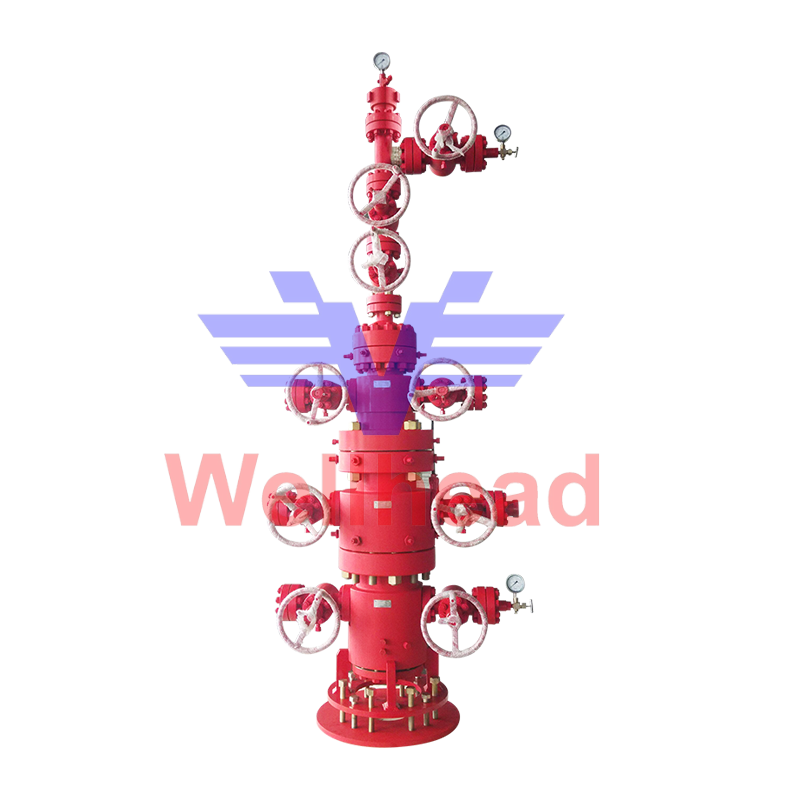 Wellhead and Christmas Tree Assembly for Oil and Gas ProductionSurface wellhead and Christmas tree assembly for controlling, monitoring, and distributing oil and gas flow at production wells.View Product →
Frequently Asked Questions
How quickly can a kick turn into a blowout?
In a gas well it can take only minutes. Gas expands as it rises, so an influx from several thousand metres down can unload the annulus very quickly once it nears surface. That is why shut-in procedure is measured in seconds and practised until it is automatic.
What is the difference between a blowout and an underground blowout?
A surface blowout reaches the rig floor and the atmosphere; an underground blowout stays below ground and cross-flows into a shallower formation. Underground blowouts can be harder to diagnose because there may be little visible flow at surface, but they still damage the well and the reservoir.
Can a blowout be stopped without a relief well?
Sometimes. Bullheading, capping, and wellbore intervention all stop blowouts, particularly on land or in shallow water. A relief well is used when other methods fail or when the well cannot be approached safely.
How often should a blowout preventer be tested?
Function testing is normally done weekly or per trip, with full pressure testing at the start of a well, after any BOP work, and at intervals set by the operator's well control policy.
Blowout well drilling rewards preparation more than reaction. A balanced mud column, a tested barrier stack, and a crew that treats a pit gain as a stop-work signal prevent more blowouts than any single piece of equipment, and they cost far less than the alternative.
 + 86-0515-88429333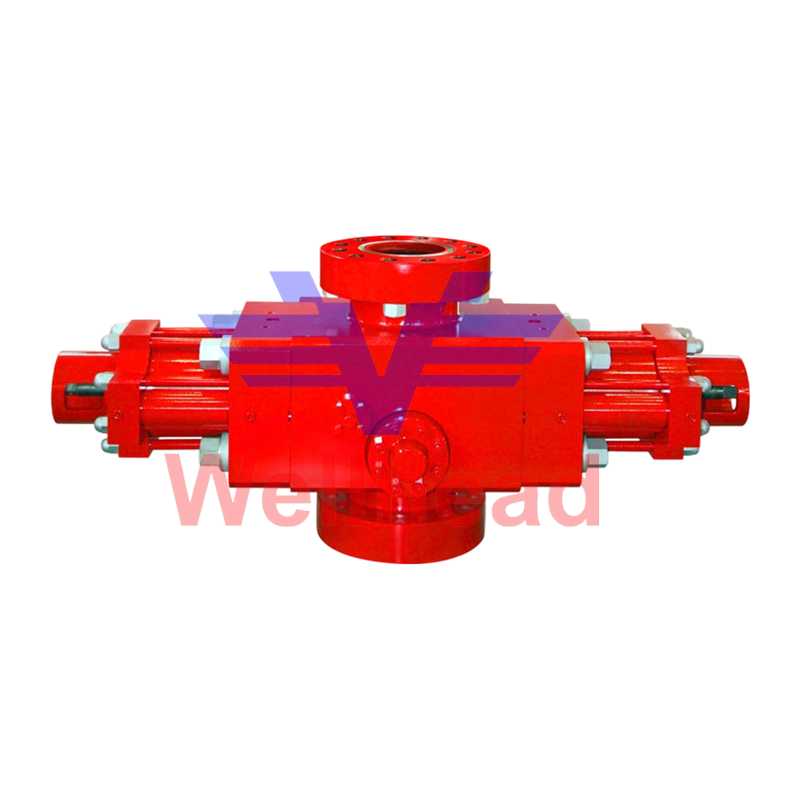

 CONTACT US
