

 English
 русский

A blow out well is a well that has lost pressure control: formation fluids enter the wellbore and flow to surface, or into a shallower formation, faster than the rig can contain them. That is the short answer. The longer answer is that almost no well blows out without prior warning. It starts as a kick, and the distance between a kick and a blowout is measured in minutes and in how well the well control equipment on the rig floor was maintained.
This article explains what a blowout actually is, what causes one, the warning signs that appear first, and the hardware, from the annular preventer to the choke and kill lines, that decides whether a kick stays a kick.
Content
Kick, Surface Blowout, Underground Blowout: What Each Term Means
These three terms describe the same failure at different stages and in different places, and mixing them up leads to wrong calls on the rig floor.
- Kick: an influx of formation fluid into the wellbore. It is still contained. Most kicks are circulated out with the mud system within a few hours, and the well never becomes a blowout.
- Surface blowout: uncontrolled flow of oil, gas, water, or drilling mud at surface. This is the event most people picture, and it is the one that reaches the shakers, the rig floor, and the news.
- Underground blowout: the fluid flows from the wellbore into another, lower-pressure formation instead of reaching surface. Nothing appears at the rig floor, which makes it the hardest variant to detect and often the most expensive to correct.
The practical point: a kick is a pressure problem, a blowout is a pressure problem that has already escaped the barriers. Everything in well control is designed to keep the first from becoming the second.
What Causes a Well to Blow Out
In practice, blowouts trace back to four root causes: an underbalanced mud column, a missed influx, failed pressure control equipment, or a crew that did not act on what the instruments were already showing them.
- Mud weight below pore pressure. If the pore pressure in a permeable zone is higher than predicted, the hydrostatic head of the mud column is not enough to hold the formation back.
- Not keeping the hole full while tripping. Every stand of pipe pulled out displaces mud. If the hole is not filled, the hydrostatic pressure drops, and the well can flow without any drilling activity at all.
- Swabbing and surge effects. Pulling pipe too fast creates a temporary pressure reduction below the bit, which can pull formation fluid into the wellbore.
- Lost circulation. Losing mud into a weak or fractured zone lowers the fluid level in the annulus and removes the primary barrier.
- Shallow gas and drilling breaks. A sudden increase in rate of penetration often signals a porous, permeable zone, sometimes with gas that enters the well faster than it can be circulated out.
- Mechanical failure. A preventer that will not close, a worn ram seal, a leaking flange, a plugged choke, or an incorrectly lined-up manifold all remove the secondary barrier exactly when it is needed.
- Human factors. Skipped pit drills, ignored gas readings, delayed shut-in, and pressure to keep drilling are recurring themes in incident reports.
Rarely is a blowout caused by one item alone. The usual pattern is a small influx that goes unnoticed because the mud weight was marginal, followed by a barrier that does not seal when it is finally closed.
Blowout Warning Signs: The First Ten Minutes
Kick detection is a reading, not an opinion. Four indicators cover most early warnings, and they are most useful when watched together rather than one at a time.
| Indicator | What you see | What it usually means |
|---|---|---|
| Pit volume gain | Pit level rises with pumps off and no fluid added | Formation fluid is entering the wellbore |
| Flow with pumps off | The flowline keeps flowing after circulation stops | The well is underbalanced and flowing on its own |
| Pump pressure change | Standpipe pressure falls at constant pump rate, or climbs steadily | Falling pressure points to density loss or a washout; rising pressure points to annulus loading up |
| Drilling break | Rate of penetration jumps sharply | A porous, permeable zone, occasionally with gas |
| Gas cut mud | Gas readings rise at the shakers | Produced gas entering the mud, or simply background gas |
None of these indicators is conclusive on its own, and the correct response when two or more appear together is the same: stop, shut in, and measure the shut-in pressures. Ten minutes spent confirming a kick is cheaper than a week spent killing a blowout.
How Pressure Control Equipment Stops a Blowout
Well control runs in three tiers, and each tier exists only because the one above it can fail.
- Primary control: the hydrostatic pressure of the mud column. It is the cheapest barrier and the one that fails first.
- Secondary control: the blowout preventer stack, together with the choke and kill lines. This is the mechanical barrier that must work on demand.
- Tertiary control: relief wells, dynamic kills, and barite plugs when the well cannot be brought back under control from the surface.
The equipment in the secondary barrier is specified by API standards: API 16A for drill-through equipment such as preventers, API 16C for choke and kill systems, and API 6A for wellhead and Christmas tree equipment. Those standards matter to buyers for a simple reason: they define the pressure ratings, materials, and test procedures that determine whether a barrier holds at 15,000 psi or leaks at 5,000.
The Annular Preventer
An annular preventer closes a rubber sealing element around whatever is in the hole, whether that is drill pipe, casing, a tool joint, or nothing at all. That flexibility is why it is usually the first preventer closed on a kick. Better annular designs allow stripping pipe through the closed element and rotating the string, which lets the crew circulate a kick out instead of just shutting the well in.
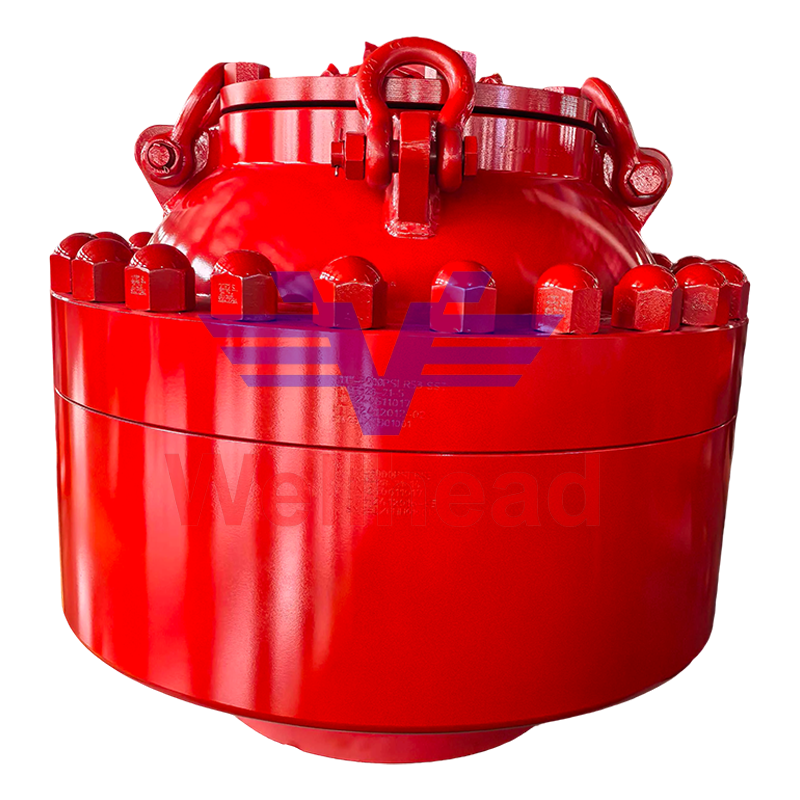 API 16A Annular Blowout Preventer for Drilling Well ControlAnnular BOP seals around drill pipe, casing, or open hole and is usually first closed on a kick.View Product →
The Ram Preventer
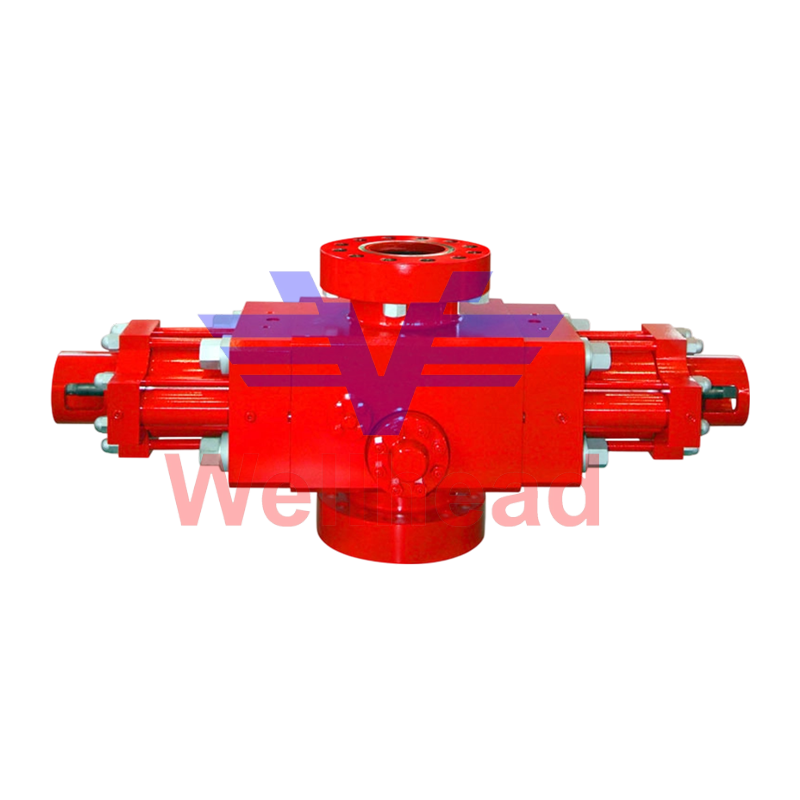
Ram preventers are the hard seal. Pipe rams close around a specific pipe size, blind rams close an open hole, and shear rams cut the pipe and seal the well. Because the sealing element is metal-backed elastomer matched to a fixed bore, rams hold higher pressures than annulars and hold them longer. A typical stack combines an annular on top with two or more ram preventers below, which is why the choice between single and double ram bodies is a sizing question rather than a preference.
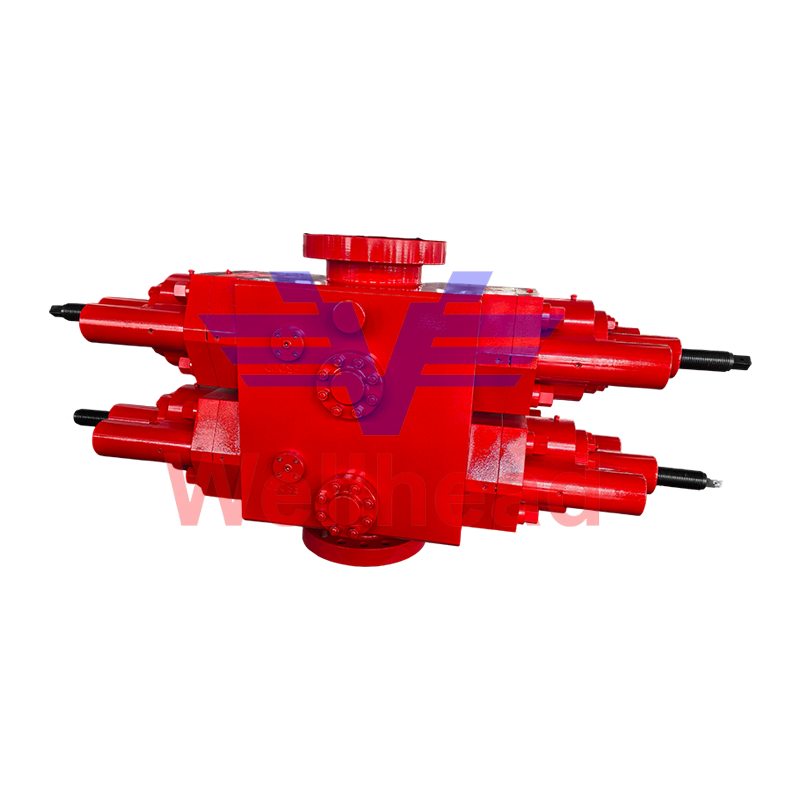 Double Ram BOP for High-Pressure Wellhead SealingDouble-ram blowout preventer uses two rams to seal around drill pipe or casing when well pressure rises abnormally.View Product →
Choke and Kill Manifolds
A preventer that closes the well only moves the problem. The choke manifold controls where the fluid goes and at what rate it is bled off, using adjustable chokes for fine control and positive chokes for fixed, predictable restriction. The kill manifold does the opposite job: it pumps weighted fluid back into the well to restore hydrostatic balance. Both see abrasive, high-velocity flow during a kill operation, so erosion resistance in the chokes, lines, and valves decides how long the manifold stays serviceable.
 API 16C Choke Manifold for Well Pressure ControlChoke manifold uses adjustable and positive chokes to control where well fluid goes and at what rate it is bled off.View Product →
Testing Is Part of the Barrier
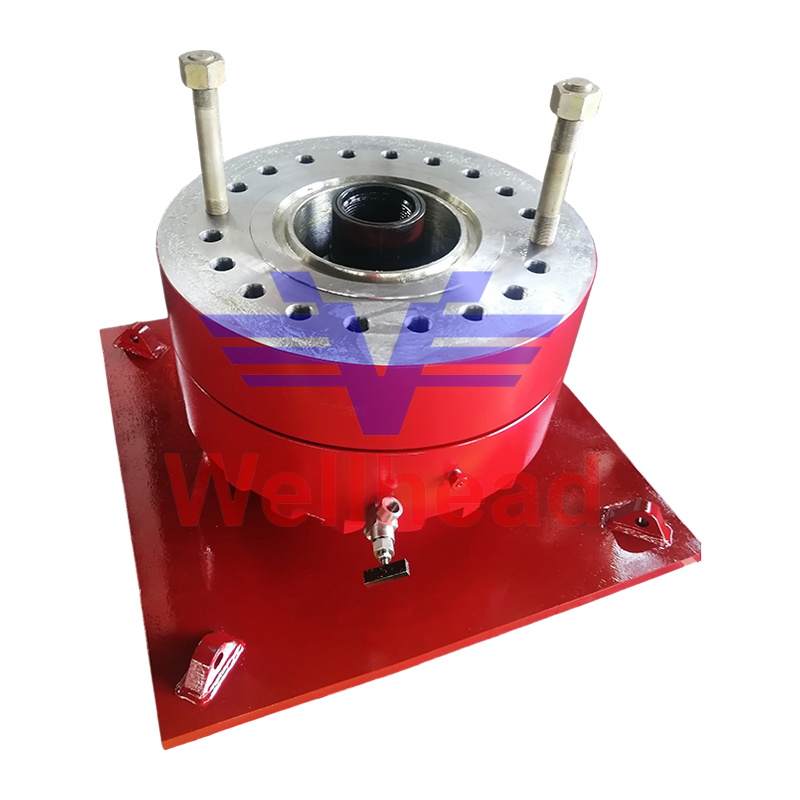
A preventer that has never been pressure tested is a promise, not a barrier. Stacks are typically function-tested between wells and pressure-tested on a regular interval or after any repair, using a test fixture rather than the well itself. The BOP test stump exists for exactly this purpose, and treating it as a piece of yard equipment rather than a safety device is a common and expensive shortcut.
Underground Blowouts: The Failure You Cannot See
An underground blowout is harder to handle because the usual evidence is missing: no flow at surface, no pit gain, no obvious pressure signature on the choke. What you get instead is a set of indirect signs.
- Lost returns that do not recover, or partial losses that continue after treatment
- Unexplained changes in pump pressure and standpipe pressure that do not match the mud weight
- Flow from one zone while injecting into another, sometimes seen in offset wells or on pressure monitoring
- Abnormal volumes in the annulus that cannot be accounted for by the trip or by displacement
Killing an underground blowout is a different discipline from a surface kill. Options include pumping a barite plug to seal the flowing interval, a dynamic kill that overwhelms the influx with a high-rate, high-density pump-in, or in the worst case a relief well. Each approach depends on knowing where the fluid is actually going, which is why pressure data and downhole surveys matter more than speed in the first hours.
Prevention: A Practical Checklist
Most prevention comes down to routine discipline rather than new technology. Before drilling ahead or tripping out, the following checks are worth running in order.
- Confirm mud weight against the latest pore pressure and fracture gradient estimates, not against the original program.
- Verify hole fill volumes on every trip, and compare them against the theoretical displacement.
- Limit trip speed in open hole to keep swab pressures within the margin.
- Function-test the annular and ram preventers before drilling out casing, and pressure-test the stack on schedule.
- Check choke and kill line line-up, and confirm the manifold valves are in the correct position and tagged.
- Confirm that the driller, the floor crew, and the mud engineer all know the shut-in procedure and who calls it.
- Review gas readings and pit trends during the shift handover, not only at the moment they spike.
Items four and five are where equipment specification matters most. A stack built to API 16A with documented test records, matched to the pressure rating of the well, removes a whole category of failure from the list before the first joint is drilled.
FAQ
How long does it take for a kick to become a blowout?
It depends on the influx rate and the well geometry, but the practical window is short: minutes to a few hours. In high-permeability gas zones the transition can happen before the crew finishes a pit check, which is why shut-in procedures are designed to be started without waiting for confirmation.
What is the difference between a blowout preventer and a wellhead?
The wellhead is the permanent structural interface at surface that supports casing strings and provides the flanged outlets for the production tree. The blowout preventer stack is the temporary drilling pressure control system bolted above it, removed when the well moves from drilling to completion. Both are pressure-rated equipment, but they serve different phases of the well's life.
Can an underground blowout be killed from the rig?
Sometimes. A barite plug or a dynamic kill from the same well can work when the receiving formation can be sealed or when pump rates can overcome the influx. If the fluid is migrating between zones or the surface equipment cannot deliver the required rate and density, a relief well is the reliable option.
Which pressure rating should I specify for BOP equipment?
Specify above the maximum anticipated surface pressure with a margin, not at the expected operating pressure. Ratings are fixed steps, typically 5,000, 10,000, and 15,000 psi working pressure in common land and offshore service, and the cost difference between steps is far smaller than the cost of a stack that cannot hold a shut-in.
The Bottom Line
A well blows out because the barriers that should have held did not: the mud column was too light, the influx was missed, or the preventer and manifold did not perform when they were finally used. Detection buys time, and equipment buys the ability to use that time. For anyone specifying or maintaining well control hardware, the priorities are unglamorous and consistent: correct pressure rating, verified API certification, seals and chokes that survive abrasive flow, and a test schedule that is actually followed.
 + 86-0515-88429333

 CONTACT US
