

 English
 русский
Frac stacks are high-pressure wellhead assemblies installed at the surface of an oil or gas well during hydraulic fracturing operations, designed to control and isolate the extreme pressures generated when fracturing fluid is pumped into the formation at rates of 50 to 150 barrels per minute and pressures reaching 15,000 psi or higher. Also called fracturing trees or frac trees, these specialized valve and fitting assemblies sit on top of the wellhead casing and provide the primary pressure containment interface between the well and the fracturing pump equipment. Without a properly rated frac stack, wellhead control during high-rate, high-pressure fracturing operations would be impossible, creating catastrophic blowout risk for personnel, equipment, and the surrounding environment. This guide explains what frac stacks are, how each component works, which pressure ratings apply to different well types, and how frac stacks compare to production trees and blowout preventers.
Content
- What Is a Frac Stack and How Does It Differ from a Christmas Tree?
- How Does a Frac Stack Work? Key Components Explained
- Frac Stack Pressure Ratings and When Each Rating Is Used
- Why Are Frac Stacks Essential to Hydraulic Fracturing Safety?
- Frac Stacks vs. Blowout Preventers vs. Production Trees: Full Comparison
- Which Industries and Well Types Use Frac Stacks?
- How Are Frac Stacks Installed and Tested Before a Fracturing Job?
- What Are the Latest Innovations in Frac Stack Technology?
- Frequently Asked Questions About Frac Stacks
- What is the difference between a frac stack and a frac tree?
- How long does a frac stack remain on a well?
- What API standards govern frac stack design and testing?
- Can a frac stack be used multiple times on different wells?
- What causes frac stack failures and how are they prevented?
- How does the number of pump connections on a frac stack affect fracturing operations?
- Conclusion: Why Frac Stacks Remain the Cornerstone of Well Completion Safety
What Is a Frac Stack and How Does It Differ from a Christmas Tree?
A frac stack is a temporary, high-pressure wellhead assembly specifically engineered for the hydraulic fracturing phase of well completion, whereas a Christmas tree (production tree) is a permanent assembly installed after completion for long-term production flow control -- the two serve entirely different operational purposes and are rated to different pressure and flow specifications.
The distinction matters enormously in field operations. A conventional production Christmas tree is designed to regulate steady-state production flows at relatively moderate wellhead pressures, typically in the range of 3,000 to 5,000 psi for most conventional wells. A frac stack, by contrast, must withstand the dynamic, pulsating high pressures generated by multiple high-horsepower fracturing pumps operating simultaneously, with working pressure ratings of 10,000 psi, 15,000 psi, or in ultra-high-pressure applications, 20,000 psi.
Key distinctions between a frac stack and a Christmas tree include:
- Purpose: Frac stacks are used only during well completion fracturing operations, typically removed within days to weeks after the fracturing program is complete. Christmas trees remain on the well for the life of the production phase, often measured in decades.
- Pressure rating: Frac stacks are rated for working pressures of 10,000 to 20,000 psi. Standard production trees for conventional oil wells are typically rated at 2,000 to 5,000 psi, though high-pressure gas well trees may be rated to 10,000 psi.
- Bore configuration: Frac stacks are configured for high-rate injection, with large-bore valve configurations that minimize friction pressure losses during pumping. Production trees prioritize choke control and flow measurement for lower-rate steady production.
- Valve types: Frac stacks use gate valves engineered for erosion resistance from proppant-laden slurry. Production trees use choke valves, needle valves, and flow control equipment suited for clean hydrocarbon production streams.
- Material specifications: Frac stack bodies are typically manufactured from high-strength alloy steels with hardened internal surfaces and erosion-resistant coatings to withstand repeated exposure to abrasive proppant slurry at high velocity.
How Does a Frac Stack Work? Key Components Explained
A frac stack works as a series of independently operable valves and fittings stacked vertically on the wellhead casing, each serving a specific pressure control or flow isolation function that collectively allows operators to safely manage wellhead pressure during every phase of the fracturing operation.
Reading from the bottom to the top of a typical frac stack assembly, the main components are:
Casing Head and Tubing Head
The casing head is the foundation piece that threads or welds onto the surface casing and provides the primary pressure-containing connection between the casing string and the wellhead assembly above it. Casing heads include side outlets for monitoring casing annulus pressure and, in some configurations, for cementing operations. The tubing head sits above the casing head and suspends the production tubing string inside the casing while sealing the annular space between them. Together, these two components form the permanent base on which both the frac stack and, later, the production Christmas tree are mounted.
Wellhead Adapter or Spacer Spool
The wellhead adapter or spacer spool connects the tubing head flange to the bottom of the frac stack, providing the correct flange size and pressure class transition between the permanent wellhead and the temporary frac equipment above it. API standard flanges are specified in pressure classes including 2,000, 3,000, 5,000, 10,000, and 15,000 psi, with corresponding flange sizes that must match throughout the frac stack assembly. The spacer spool also provides side outlet ports used for kill lines, monitoring, and chemical injection during fracturing.
Master Gate Valve (Lower Master Valve)
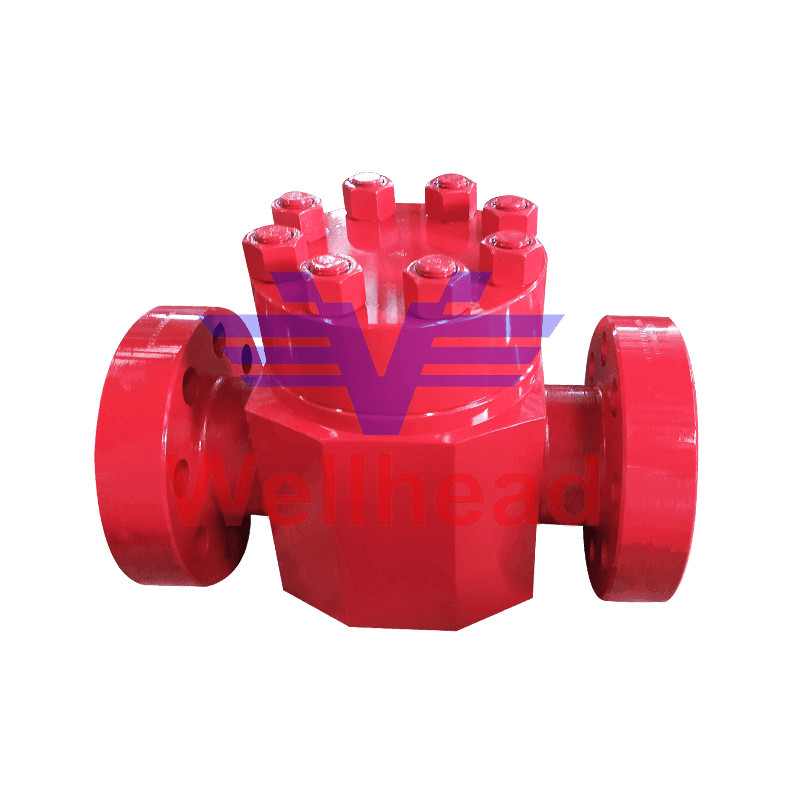
The master gate valve is the primary wellbore isolation valve in the frac stack, positioned immediately above the wellhead and capable of completely shutting in the well by closing across the full bore of the wellhead in an emergency or planned shutdown. Master gate valves on frac stacks are typically full-opening gate valves with bore sizes matching the wellhead bore -- commonly 2-1/16 inch, 3-1/16 inch, or 4-1/16 inch -- that allow wireline tools and coiled tubing to pass through without restriction when open. These valves are rated to the same working pressure as the frac stack itself and are designed to close on flowing well conditions if required.
Swab Valve (Upper Master Valve)
The swab valve sits above the master gate valve and serves as a secondary wellbore isolation point, primarily used to control access to the wellbore for wireline operations, well testing, and pressure monitoring without having to operate the lower master valve. In routine operations, the swab valve is the valve that is opened and closed most frequently, preserving the master valve's seat condition for genuine emergency isolation use. The swab valve is also the uppermost valve through which a lubricator or stuffing box is connected when running wireline tools into the well under pressure.
Wing Valves and Frac Crosses
Wing valves branch off the main bore of the frac stack at 90-degree angles through a cross or tee fitting, providing the high-pressure flow paths through which fracturing fluid is pumped into the well and through which flowback fluid returns to surface after the frac treatment. A standard frac cross has one vertical bore (the wellbore path through the stack) and two or four horizontal outlet ports equipped with wing valves. Multiple wing valves allow simultaneous connection of fracturing iron, kill lines, pressure monitoring gauges, and chemical injection lines. During pumping operations, the wing valves connected to the fracturing iron are fully open, while kill line valves and monitoring valves remain closed.
Fracturing Head (Frac Head or Goat Head)
The fracturing head, commonly called a goat head due to its characteristic multi-outlet appearance, is the topmost component of the frac stack and the primary connection point for the high-pressure fracturing iron lines that deliver fluid from the pumping equipment to the wellhead. A typical goat head has four to eight threaded or flanged outlets arranged radially around a central bore, allowing multiple pump lines to be connected simultaneously to achieve the total fluid injection rate required for the fracturing treatment. Each outlet has its own isolation valve, allowing individual pump lines to be connected, disconnected, and pressure tested while others remain active. Goat heads are rated to the same working pressure as the rest of the frac stack and are designed to distribute the high-velocity proppant slurry flow from multiple inlets into the single wellbore without creating turbulence or excessive erosion.
Frac Stack Pressure Ratings and When Each Rating Is Used
Frac stack pressure ratings must match or exceed the maximum anticipated surface treating pressure for the well, which depends on the formation fracture pressure gradient, the planned fluid injection rate, and the friction pressure losses in the wellbore and perforations.
| Working Pressure Rating | Test Pressure | Typical Well Application | Formation Type | API Pressure Class |
| 5,000 psi | 7,500 psi | Shallow wells, coalbed methane | Low-pressure formations | 5K |
| 10,000 psi | 15,000 psi | Conventional tight gas, moderate-depth shale | Medium-pressure formations | 10K |
| 15,000 psi | 22,500 psi | Deep shale plays, tight oil, high-rate completions | High-pressure formations | 15K |
| 20,000 psi | 30,000 psi | Ultra-deep wells, extreme pressure formations | Ultra-high-pressure formations | 20K |
Table 1: Frac stack working pressure ratings, corresponding test pressures, and typical well applications by formation pressure class.
The 15,000 psi rating has become the most widely used specification in North American unconventional shale development. In major plays such as the Permian Basin, Eagle Ford, and Marcellus, surface treating pressures routinely reach 8,000 to 12,000 psi during the initial breakdown and early fracture propagation phases, making a 15K frac stack the standard minimum specification for most completion programs in these basins. The 15K working pressure provides a 25% safety margin above a 12,000 psi maximum treating pressure, consistent with API and industry safety practice.
Why Are Frac Stacks Essential to Hydraulic Fracturing Safety?
Frac stacks are the last line of wellhead pressure defense during hydraulic fracturing, a period when the well is intentionally subjected to the highest surface pressures it will ever experience -- pressures that, if uncontrolled, can cause wellhead failure, surface blowouts, and catastrophic personnel injury within seconds.
Pressure Containment During Multi-Stage Fracturing
Modern horizontal well completions in shale formations involve 20 to 60 or more individual fracturing stages, each requiring the wellhead assembly to safely contain high-pressure fluid injection for 30 to 90 minutes per stage, with total wellhead exposure to elevated pressure spanning multiple days per well. A single completion program in the Permian Basin might involve pumping 20 to 40 million pounds of proppant per well across all stages, with peak treating rates of 100 barrels per minute per stage. The frac stack must maintain full pressure containment integrity throughout this entire program, with no tolerance for valve seal degradation or body fatigue.
Emergency Wellbore Isolation
In the event of a surface equipment failure, fracturing iron leak, or wellbore control event during pumping operations, the master gate valve in the frac stack provides the emergency isolation capability to shut in the well and stop all flow within seconds. This rapid isolation capability is what separates a managed well control event from a blowout. Industry well control statistics indicate that the majority of surface blowout incidents during completion operations involve failures of wellhead or surface equipment, making the integrity and operability of frac stack valves under flowing conditions a critical safety parameter. All frac stack valves are required by industry standards (API Spec 6A and API Spec 16C) to be tested to their full working pressure before installation on a live well.
Proppant Erosion Management
The hydraulic fracturing slurry pumped through a frac stack contains proppant concentrations of 0.5 to 4 pounds per gallon of sand or ceramic material traveling at velocities of 20 to 50 feet per second through valve bodies and fittings, creating severe erosion conditions that would rapidly destroy standard valve components. Frac stack components exposed to slurry flow are manufactured from hardened steel alloys with surface hardness values of 55 to 65 Rockwell C and, in high-volume applications, carbide or ceramic internal liners in the highest-erosion areas such as the goat head outlets and the frac cross ports. Component life monitoring and replacement scheduling are standard parts of frac stack maintenance programs to prevent in-service failures from accumulated erosion damage.
Frac Stacks vs. Blowout Preventers vs. Production Trees: Full Comparison
Frac stacks, blowout preventers (BOPs), and production Christmas trees serve three distinct phases of well life and are engineered for fundamentally different pressure control functions, though all three may be present at a wellsite simultaneously during the completion phase.
| Feature | Frac Stack | Blowout Preventer (BOP) | Production Christmas Tree |
| Primary function | High-pressure injection control | Well control during drilling | Production flow control |
| Phase of well life | Completion (fracturing) | Drilling | Production |
| Typical pressure rating | 10,000-20,000 psi | 5,000-15,000 psi | 2,000-10,000 psi |
| Duration of use | Days to weeks (temporary) | Weeks to months (drilling) | Years to decades (permanent) |
| Flow direction | Injection into well | Shut-in (blocks flow) | Production out of well |
| Erosion resistance | Critical (proppant slurry) | Moderate (drilling mud) | Low (clean fluids) |
| Valve type | Gate valves (erosion-resistant) | Ram and annular preventers | Gate, choke, needle valves |
| Multiple inlet ports | Yes (4-8 pump connections) | No | No |
| API governing standard | API Spec 6A | API Spec 16A | API Spec 6A |
Table 2: Frac stacks compared to blowout preventers and production Christmas trees by function, pressure rating, duration, and design features.
Which Industries and Well Types Use Frac Stacks?
Frac stacks are used across all sectors of the oil and gas industry where hydraulic fracturing is performed as part of well completion or stimulation, with the heaviest concentration of use in North American unconventional shale and tight oil plays where fracturing is not optional but a fundamental requirement for commercial production.
Unconventional Shale Oil and Gas
Unconventional shale development accounts for the overwhelming majority of frac stack demand in North America, with the Permian Basin alone hosting over 400 active drilling rigs at peak activity periods, each well requiring a frac stack for the completion phase that follows drilling. Horizontal wells in major shale plays including the Permian Basin, Eagle Ford, Bakken, Marcellus, and Haynesville are essentially non-productive without hydraulic fracturing. The rock permeability in these formations is typically 0.0001 to 0.001 millidarcies, thousands of times lower than conventional reservoirs, meaning natural flow to the wellbore is negligible without the fracture network created by the fracturing program. Every one of the approximately 10,000 to 14,000 horizontal wells completed annually in North America at peak activity requires a frac stack.
Tight Gas and Conventional Stimulation
Conventional tight gas wells in formations such as the Pinedale Anticline, Green River Basin, and various mid-continent gas plays also require frac stacks for completion, though these are often single-stage or limited-stage fracturing programs operating at lower treating pressures than multi-stage shale completions. Many conventional gas wells that were originally completed without fracturing have also been re-fractured (restimulated) using frac stacks to improve production from depleted zones, a practice that has extended the economic life of thousands of mature conventional gas wells across North America and internationally.
Geothermal Energy Development
Enhanced geothermal system (EGS) development, which uses hydraulic fracturing to create permeable fracture networks in hot dry rock formations for heat extraction, represents an emerging application for frac stacks outside the traditional oil and gas sector. EGS projects, including demonstration projects in Nevada, Utah, and internationally in Australia and Germany, use the same high-pressure fracturing technology as oil and gas completions and require frac stacks rated to the wellhead pressures generated during stimulation. As geothermal energy development expands under renewable energy incentives, frac stack demand from this sector is expected to grow through the late 2020s.
How Are Frac Stacks Installed and Tested Before a Fracturing Job?
Frac stack installation and pre-job pressure testing are mandatory safety steps that must be completed and documented before any fracturing pump equipment is connected or pressurized, following procedures specified by API Spec 6A and the operator's well control and completion engineering programs.
- Wellhead preparation: The drilling BOP stack is removed from the wellhead after the well is secured and cemented. The wellhead flanges are inspected, cleaned, and fitted with the appropriate ring gaskets for the frac stack pressure class being installed.
- Frac stack assembly: The frac stack components are assembled in sequence from bottom to top -- spacer spool, master valve, swab valve, frac cross, wing valves, and fracturing head -- using calibrated torque values for all flange bolts. Each flange connection requires a specific number of bolts, bolt grade, and torque specification per API Spec 6A tables.
- Low-pressure function test: All valves in the frac stack are function-tested (opened and closed) at low pressure, typically 300 to 500 psi, using water to verify that each valve operates correctly and holds pressure on both seats before the high-pressure test begins.
- High-pressure leak test: The entire frac stack assembly is pressure tested to the operator-specified test pressure, which is typically equal to the maximum anticipated surface treating pressure for the job. Industry practice commonly requires holding the test pressure for 15 minutes with zero pressure drop before accepting the test. Any pressure drop requires identification and repair of the leak source before retesting.
- Documentation and sign-off: The test results, including test pressure, hold time, pressure chart, and names of personnel who witnessed the test, are recorded in the well completion file. Most operators require the company representative, fracturing service supervisor, and wellsite safety officer to sign the pressure test record before fracturing operations may begin.
What Are the Latest Innovations in Frac Stack Technology?
The frac stack industry is evolving rapidly in response to the dual pressures of higher treating pressures in deeper, more complex wells and operator demands for faster rig-up and rig-down times to reduce non-productive time costs, driving innovation in materials, connection systems, and remote operation capabilities.
- Studded connections replacing flanges: Traditional bolted API flanges require significant time and torque equipment to make up and break out. Newer frac stack designs use quick-connect studded connections that can be made up in a fraction of the time, reducing frac stack installation time from several hours to under one hour on repeat completions.
- 20,000 psi rated equipment: As ultra-deep well completions in formations like the Haynesville Shale deep gas targets and emerging deepwater completion applications push treating pressures toward and above 15,000 psi, the frac stack industry has developed commercial 20,000 psi working pressure assemblies using enhanced alloy steels and precision machining tolerances previously limited to subsea Christmas tree applications.
- Remote-operated valve actuation: Electrically or hydraulically actuated frac stack valves that can be operated from a safe distance or from a control cabin remove personnel from the immediate wellhead area during high-pressure pumping operations, reducing exposure to the consequence zone of a potential high-pressure release event.
- Integral erosion monitoring: Some advanced frac stack assemblies now incorporate ultrasonic wall thickness sensors at the highest-erosion locations in the goat head and frac cross, providing real-time remaining wall thickness data to completion engineers and enabling data-driven component retirement decisions rather than calendar-based replacement schedules.
- Automation integration with e-frac systems: The emergence of electric fracturing (e-frac) pump fleets, which offer higher efficiency and lower emissions than diesel pump fleets, is driving the development of frac stack control systems that integrate with the automated pump control architecture, enabling pressure response coordination between the wellhead valves and the pumping equipment without manual operator intervention at the wellhead.
Frequently Asked Questions About Frac Stacks
What is the difference between a frac stack and a frac tree?
A frac stack and a frac tree refer to the same assembly -- the high-pressure wellhead valve and fitting system used during hydraulic fracturing operations -- with "frac tree" being the more common term in field operations and "frac stack" used more frequently in engineering and equipment specifications. Both terms describe the temporary wellhead assembly that replaces the drilling BOP after well completion and is itself replaced by the permanent production Christmas tree after the fracturing program is complete. The terms are interchangeable in most industry contexts.
How long does a frac stack remain on a well?
A frac stack typically remains on a well for the duration of the fracturing program plus the initial flowback period, which ranges from a few days on single-stage conventional well completions to four to eight weeks on complex multi-stage horizontal shale completions with extended flowback programs. After the fracturing program is complete and initial flowback has been managed, the frac stack is removed and replaced with the permanent production Christmas tree. Frac stacks are rental equipment in most cases, with day rates ranging from $500 to $3,000 per day depending on pressure class and configuration, creating a cost incentive for operators to minimize the time the frac stack is on the well.
What API standards govern frac stack design and testing?
Frac stacks are designed, manufactured, and tested in accordance with API Specification 6A (Wellhead and Christmas Tree Equipment), which specifies material requirements, pressure testing procedures, dimensional standards, and quality management requirements for all wellhead valves and fittings including those used in fracturing service. Additionally, API Spec 6AF2 provides supplemental requirements for fracturing equipment specifically, covering erosion resistance, high-cycle pressure testing, and material hardness specifications relevant to proppant slurry service. Equipment used in hydrogen sulfide (sour gas) environments must also comply with NACE MR0175/ISO 15156 for sulfide stress cracking resistance.
Can a frac stack be used multiple times on different wells?
Yes -- frac stacks are designed as reusable rental equipment and are routinely used across many wells throughout their service life, provided they pass required pressure and function testing between jobs and receive scheduled maintenance and inspection to address erosion damage and valve seal wear. Between uses, frac stack components are disassembled, internally inspected using visual and non-destructive testing methods (magnetic particle inspection, ultrasonic wall thickness measurement), worn seals and seats are replaced, and the assembly is pressure tested and recertified before being deployed on the next well. A well-maintained 15,000 psi frac stack may complete 20 to 50 or more fracturing jobs over its service life before body wear requires retirement.
What causes frac stack failures and how are they prevented?
The most common frac stack failure modes are erosion of valve bodies and seats from proppant slurry, fatigue cracking at flange connections from high-cycle pressure loading, and seal failures at valve packing from repeated opening and closing cycles under high differential pressure. Prevention relies on matching the equipment pressure and erosion rating to the actual treating conditions, performing thorough inspection and component replacement between jobs, adhering to maximum proppant concentration and pump rate limits specified in the equipment's service parameters, and pressure testing the assembly to the required test pressure before each deployment. Statistical tracking of component wall thickness measurements over successive jobs allows service companies to identify erosion trends and retire components before they reach the minimum allowable wall thickness.
How does the number of pump connections on a frac stack affect fracturing operations?
The number of pump connection ports on the frac stack goat head determines how many simultaneous pump lines can be connected to the wellhead, directly limiting the maximum achievable injection rate for the fracturing treatment. A four-outlet goat head connected to four fracturing pump lines each flowing at 20 barrels per minute delivers a maximum wellhead rate of 80 barrels per minute through the frac stack. Modern high-rate completions in the Permian Basin and other premium shale plays often require treating rates of 80 to 120 barrels per minute to efficiently place large proppant volumes, requiring eight-outlet goat heads or dual-goat-head configurations to provide sufficient connection capacity for the pump fleet size required to achieve these rates.
Conclusion: Why Frac Stacks Remain the Cornerstone of Well Completion Safety
Frac stacks represent one of the most technically demanding categories of oilfield pressure control equipment, operating at the intersection of extreme pressure, highly abrasive flow conditions, and critical safety requirements during the most intensive pressure exposure period in any well's life. Their role in enabling the North American unconventional oil and gas revolution -- which transformed the United States from a net oil importer to the world's largest crude oil producer -- cannot be overstated. Without reliable, high-pressure frac stack technology capable of withstanding the treating pressures and proppant erosion conditions of modern multi-stage completions, the economic development of shale formations would have been impossible.
As well completion programs continue to evolve toward deeper targets, higher treating pressures, and larger proppant volumes per well, frac stack technology is advancing in parallel through higher pressure ratings, faster connection systems, remote operation capabilities, and integrated monitoring to meet the demands of the next generation of unconventional well completions safely and efficiently. For any operator, drilling contractor, or completion engineer involved in hydraulic fracturing operations, understanding frac stack specifications, installation requirements, and maintenance standards is not optional knowledge but a fundamental safety and operational competency.
 + 86-0515-88429333

 CONTACT US
