

 English
 русский
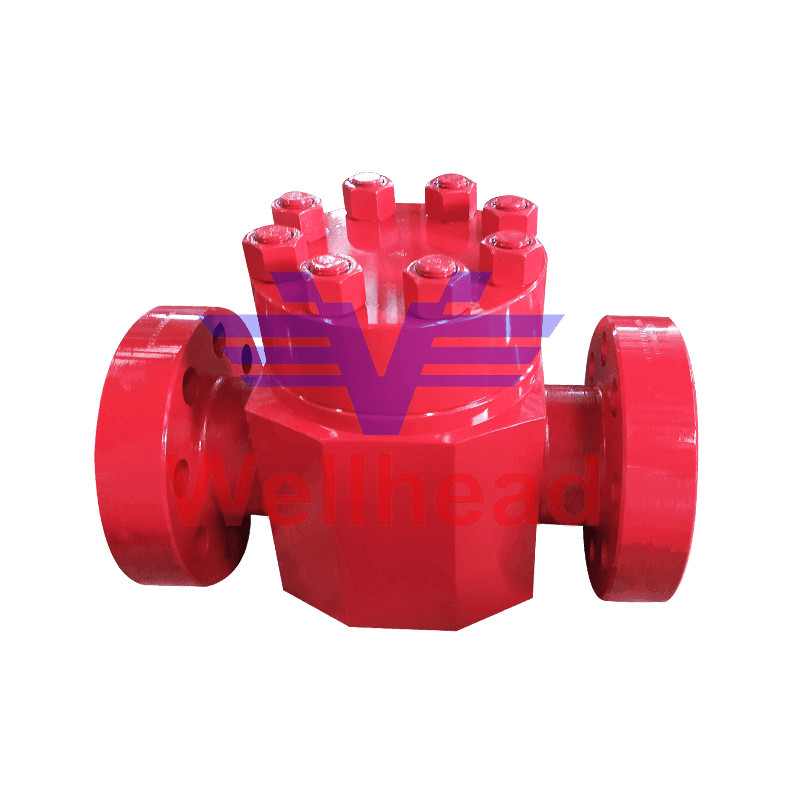
API 6A check valves are critical flow-control components engineered to permit fluid movement in one direction while preventing backflow. Manufactured and tested under the rigorous API Spec 6A standard — which governs wellhead and Christmas tree equipment — these valves are indispensable across upstream, midstream, and downstream oil and gas operations. Their ability to withstand extreme pressures, corrosive media, and harsh field environments makes them the go-to choice for operators worldwide.
Content
- Understanding API 6A Check Valves: Standards and Design
- Common Applications of API 6A Check Valves in Oil and Gas
- API 6A Check Valve Types: Side-by-Side Comparison
- API 6A PSL Levels: Which One Do You Need?
- Why API 6A Check Valves Are Preferred Over Standard Check Valves
- How to Select the Right API 6A Check Valve
- Frequently Asked Questions (FAQ)
- Conclusion
Understanding API 6A Check Valves: Standards and Design
The API 6A standard (Specification for Wellhead and Christmas Tree Equipment) sets mandatory requirements for materials, dimensions, pressure ratings, temperature classes, and testing procedures. A check valve built to API 6A must meet pressure ratings ranging from 2,000 psi to 20,000 psi (PSL 1–PSL 4), ensuring suitability for the most demanding downhole and surface applications.
Key Design Characteristics
- Pressure Rating: 2,000 – 20,000 psi working pressure
- Temperature Classes: K (−60°F to 250°F) through V (−20°F to 350°F)
- Material Classes: AA, BB, CC, DD, EE, FF, HH — selected based on H₂S, CO₂, and chloride content
- End Connections: Flanged, threaded, or hub-end per API 6A specifications
- Product Specification Level (PSL): PSL 1 to PSL 4
- Performance Requirements (PR): PR1 or PR2 cycle testing
Common Applications of API 6A Check Valves in Oil and Gas
1. Wellhead and Christmas Tree Assemblies
The most traditional application of API 6A check valves is within wellhead systems and Christmas tree configurations. These valves prevent the uncontrolled backflow of well fluids — including crude oil, natural gas, and formation water — during shut-in or pressure-reversal events. Installed on production outlets, kill lines, and choke manifolds, they serve as the primary safety barrier between the reservoir and surface equipment.
2. Choke and Kill Manifolds (Drilling Operations)
During well control operations, API 6A check valves are integrated into choke and kill manifold assemblies. They prevent the reverse flow of high-pressure drilling fluids (mud) back into the pumping system when kick or blowout conditions are detected. Their fast-acting, self-actuating mechanism responds automatically — without operator intervention — to protect pump lines and surface equipment.
3. High-Pressure Gas Injection Systems
Enhanced oil recovery (EOR) relies on injecting gas (CO₂, nitrogen, or natural gas) at very high pressures. API 6A check valves on injection headers ensure that if a compressor fails or shuts down suddenly, reservoir fluids cannot flow back into the injection system. This protects compressors from reverse-flow surge damage and maintains system integrity.
4. Subsea and Offshore Production Systems
Subsea tree assemblies and offshore production manifolds operate in the most extreme environments — with pressures up to 15,000 psi and temperatures near freezing. API 6A check valves used here meet the highest PSL 3 or PSL 4 requirements, along with full material traceability and sour service compliance (NACE MR0175/ISO 15156). Their compact, robust design withstands hydrostatic pressure and prevents seawater ingress on backflow events.
5. Surface Production and Test Manifolds
On surface production facilities, multiple wells are tied into a production manifold or test separator. API 6A check valves are installed at each well inlet to prevent cross-flow between wells — ensuring that a higher-pressure well cannot push its fluid back into a lower-pressure well's flowline. This is essential for accurate well testing and production accounting.
6. Cementing and Stimulation Operations
During cementing jobs and hydraulic fracturing, pumps push fluids downhole at extreme pressures. If a pump is stopped or the wellbore pressure exceeds the pump discharge pressure, backflow can occur. API 6A check valves installed on the cementing or fracturing iron prevent costly and dangerous backflow of cement slurry or fracturing fluid into the pump system.
7. Gas Lift Systems
Gas lift is a widely used artificial lift method where high-pressure gas is injected into the production tubing to reduce the hydrostatic head of the fluid column. API 6A check valves on gas lift manifolds and injection headers ensure that crude oil or produced water cannot migrate back into the gas injection system during shut-in periods, protecting compressors and surface piping.
API 6A Check Valve Types: Side-by-Side Comparison
| Valve Type | Mechanism | Best Application | Pressure Range | Key Advantage |
| Piston Check Valve | Spring-loaded piston | Wellhead, kill lines | Up to 20,000 psi | Compact, reliable seal |
| Ball Check Valve | Floating ball seating | Gas injection, cementing | Up to 15,000 psi | Simple, low-maintenance |
| Swing Check Valve | Hinged disc (flapper) | Surface manifolds, pipelines | Up to 10,000 psi | Low pressure drop |
| Dual Plate Check | Twin spring-loaded plates | High-flow production lines | Up to 10,000 psi | Fast closure, water hammer reduction |
| Subsurface Check Valve | Tubing-retrievable ball/flapper | Downhole gas lift mandrels | Up to 15,000 psi | Downhole backflow prevention |
API 6A PSL Levels: Which One Do You Need?
| PSL Level | Inspection & Testing | Documentation | Typical Use |
| PSL 1 | Minimum requirements | Basic mill cert | Low-risk surface applications |
| PSL 2 | Additional NDE, hardness | Enhanced traceability | Standard wellhead systems |
| PSL 3 | Full NDE, impact testing | Full material traceability | Sour/offshore environments |
| PSL 4 | Most stringent testing, 3rd-party witness | Complete audit trail | Deepwater, HPHT, critical safety |
Why API 6A Check Valves Are Preferred Over Standard Check Valves
Many operators face a procurement decision: use a general-purpose industrial check valve or specify an API 6A check valve. The differences are significant:
- Material Traceability: API 6A mandates full material heat traceability; standard industrial valves often do not.
- Pressure Testing: Every API 6A valve undergoes hydrostatic shell, seat, and functional testing before shipment. Industrial valves may only be sample-tested.
- Sour Service Compliance: Material classes EE/FF/HH are specifically engineered for H₂S environments per NACE MR0175.
- Temperature Extremes: API 6A temperature classes accommodate arctic (−60°F) to desert (350°F) conditions.
- Regulatory Compliance: Many national oil companies and operators contractually require API 6A certification for wellhead-connected equipment.
- Longer Service Life: PR2 cycle-tested valves demonstrate durability through thousands of open/close cycles under full rated pressure.
How to Select the Right API 6A Check Valve
Step 1 — Define Operating Conditions
Identify the maximum allowable working pressure (MAWP), operating temperature range, and fluid composition (oil, gas, water, or multiphase). For H₂S-bearing environments, determine the partial pressure of H₂S to select the correct material class.
Step 2 — Determine Required PSL and PR Rating
Match the safety criticality of the installation to the appropriate PSL. Wellhead equipment interfacing directly with the annulus or production tubing typically requires PSL 3 or PSL 4.
Step 3 — Select Valve Type and End Connection
Choose piston, ball, or flapper-type valves based on flow characteristics, acceptable pressure drop, and installation orientation. Confirm whether flanged, threaded, or hub connections are required to interface with existing equipment.
Step 4 — Verify Third-Party Certification
Request mill test reports (MTRs), certificate of conformance (CoC), and third-party inspection reports (where required by PSL 4). Confirm the manufacturer holds a valid API 6A license monogram.
Frequently Asked Questions (FAQ)
Q1: What does API 6A certification mean for a check valve?
It means the valve is designed, manufactured, and tested according to the API Specification 6A for wellhead and Christmas tree equipment. The manufacturer holds an API monogram license, and each valve ships with documentation confirming compliance with the specified PSL, material class, and temperature class requirements.
Q2: Can API 6A check valves be used for sour gas service?
Yes. API 6A check valves with material classes DD, EE, FF, or HH are specifically designed for sour service (containing H₂S). These materials comply with NACE MR0175/ISO 15156, which limits hardness and mandates special heat treatment to resist sulfide stress cracking (SSC).
Q3: What is the maximum pressure rating for API 6A check valves?
API 6A check valves are available in pressure ratings of 2,000 / 3,000 / 5,000 / 10,000 / 15,000 / 20,000 psi. The 20,000 psi rating is used in High Pressure High Temperature (HPHT) wells and deepwater subsea applications where reservoir pressures are extremely elevated.
Q4: What is the difference between PSL 3 and PSL 4 for API 6A check valves?
Both PSL 3 and PSL 4 require full material traceability and comprehensive NDE. PSL 4 additionally requires witnessed testing by a third-party inspection agency and mandates body and bonnet pressure testing at 1.5× working pressure. PSL 4 is reserved for the highest safety-criticality applications, such as subsea trees and HPHT well control equipment.
Q5: How often should API 6A check valves be inspected or replaced?
Inspection intervals depend on service conditions, fluid erosivity, and operator maintenance programs. As a general guideline, API 6A check valves in critical wellhead service should be visually inspected and function-tested during each scheduled well maintenance visit (typically every 12–24 months). Valves in corrosive or sand-laden service may require shorter intervals.
Q6: Are API 6A check valves suitable for cryogenic LNG service?
API 6A is specifically scoped for wellhead and Christmas tree equipment at the point of production. For cryogenic LNG temperatures (below −150°F), valves designed and tested per API 6D or ASME B16.34 with cryogenic extensions are more appropriate. However, API 6A valves with temperature class K (−60°F minimum) may cover certain cold-climate wellhead service conditions.
Q7: What body materials are commonly used in API 6A check valves?
Common body materials include AISI 4130 low-alloy steel (material class AA/BB), 316L stainless steel (CC), Duplex or Super Duplex stainless (for corrosive service), and Inconel 625 or similar nickel alloys for HPHT/sour environments (HH class). Material selection is driven by the H₂S partial pressure, CO₂ content, chloride concentration, and operating temperature.
Conclusion
API 6A check valves are far more than simple non-return devices. They are engineered safety components that protect personnel, equipment, and the environment across every stage of oil and gas production — from initial drilling to enhanced recovery. Their applications span wellheads, choke manifolds, gas injection systems, subsea trees, cementing iron, and gas lift infrastructure.
Specifying the correct API 6A check valve — with the right pressure rating, PSL level, material class, and valve type — is a decision that directly impacts operational reliability and safety. By understanding these applications and selection criteria, engineers and procurement teams can confidently choose valves that meet both regulatory requirements and the real demands of the field.
 + 86-0515-88429333

 CONTACT US
