

 English
 русский
API 6A is the American Petroleum Institute specification governing the design, manufacturing, testing, and documentation of wellhead and Christmas tree equipment used in oil and gas exploration and production. It establishes the minimum performance requirements for equipment exposed to wellbore pressures and corrosive fluids, covering everything from casing heads and tubing spools to gate valves, chokes, and hangers. Any operator, engineer, or procurement specialist involved in upstream oil and gas must understand API 6A — it is the foundational standard that determines whether wellhead equipment is fit for service, legally compliant, and safe under extreme pressure and temperature conditions.
Content
- What Does API 6A Actually Cover in Oil and Gas Wellhead Applications?
- How Are API 6A Pressure Ratings and Material Classes Defined?
- What Are the API 6A Temperature Rating Classes and Why Do They Matter?
- How Do API 6A Product Specification Levels (PSL) Differ from Each Other?
- Which API 6A Equipment Is Required at a Typical Wellhead Installation?
- How Does API 6A Compare to ISO 10423 and Other Related Standards?
- Why Is API 6A Compliance Mandatory and What Are the Consequences of Non-Compliance?
- How Should Operators Specify API 6A Equipment in Procurement Documents?
- Frequently Asked Questions About API 6A in Oil and Gas Operations
- Conclusion: Why API 6A Remains the Cornerstone of Wellhead Safety and Integrity
What Does API 6A Actually Cover in Oil and Gas Wellhead Applications?
API 6A covers all pressure-containing and pressure-controlling equipment installed at the wellhead — from the moment the well is drilled to the point where hydrocarbons are routed into production systems. The standard is published by the American Petroleum Institute and is currently in its 21st edition, with content aligned to ISO 10423, its international equivalent recognized across global oil and gas operations.
The scope of API Spec 6A includes but is not limited to:
- Casing heads and casing spools: The structural foundation at surface that supports and seals the casing strings run into the wellbore.
- Tubing heads and tubing spools: Equipment that supports and seals production tubing, enabling flow isolation between the annulus and production conduit.
- Christmas trees (vertical and horizontal): The assembly of valves, chokes, and fittings mounted atop the wellhead to control and direct produced fluids or gas.
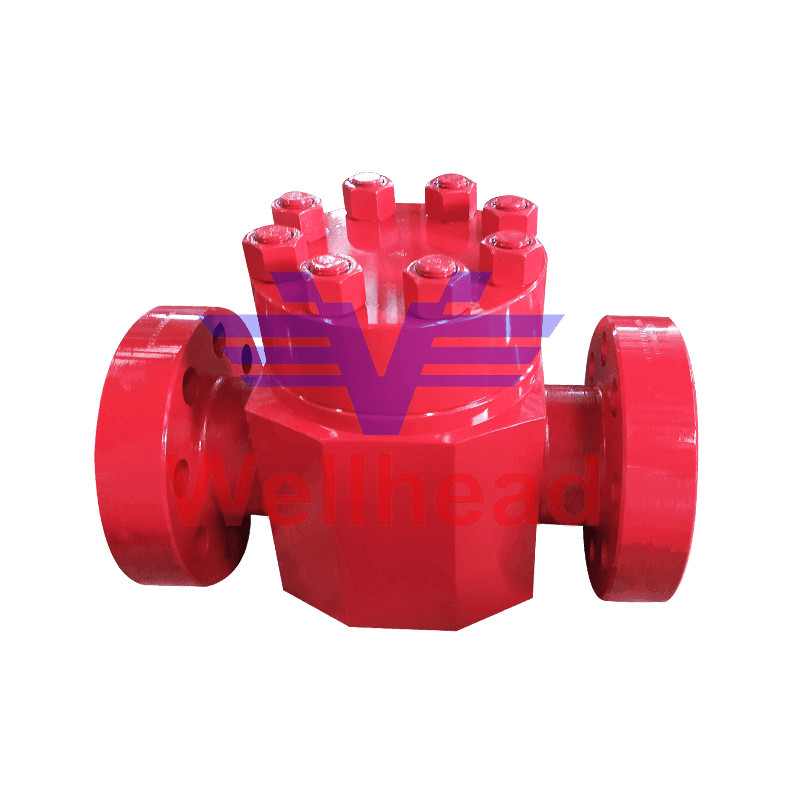
- Gate valves, check valves, and plug valves: Pressure-rated flow control components manufactured to specific bore sizes and pressure ratings.
- Chokes (positive and adjustable): Devices that restrict flow to control wellhead back-pressure and production rates.
- Mandrel and slip-type hangers: Equipment that suspends casing or tubing strings and provides a pressure seal within the wellhead stack.
- Wellhead connectors and flanges: Standardized end connections that allow modular assembly of wellhead components in the field.
How Are API 6A Pressure Ratings and Material Classes Defined?
API 6A defines seven standard pressure ratings and four material classes that collectively determine which equipment is appropriate for a given well environment. Selecting the correct pressure rating and material class is not optional — under-specified equipment is a primary cause of wellhead failures, blowouts, and loss-of-containment events in the upstream sector.
API 6A Pressure Rating Classes
The API 6A pressure ratings are expressed in pounds per square inch (psi) working pressure and cover the full range from shallow onshore gas wells to high-pressure deepwater and HPHT (high-pressure, high-temperature) applications:
| Working Pressure Rating | psi | bar (approx.) | Typical Application |
| 2,000 psi | 2,000 | 138 | Shallow onshore oil wells, low-pressure gas |
| 3,000 psi | 3,000 | 207 | Medium onshore production |
| 5,000 psi | 5,000 | 345 | Standard onshore and offshore production wells |
| 10,000 psi | 10,000 | 690 | High-pressure offshore, deep wells |
| 15,000 psi | 15,000 | 1,034 | HPHT wells, deepwater subsea |
| 20,000 psi | 20,000 | 1,379 | Ultra-HPHT exploration wells |
| 20,000 psi (extended) | 20,000+ | 1,379+ | Next-gen HPHT with enhanced testing protocols |
Table 1: API 6A standard working pressure ratings, their metric equivalents, and typical upstream oil and gas applications.
API 6A Material Classes
API 6A defines four material classes (AA, BB, CC, DD) that specify the minimum material requirements based on the corrosive nature of the produced fluids. These classes are not interchangeable — selecting an incorrect material class in a sour (H2S-bearing) environment leads to sulfide stress cracking (SSC), a catastrophic and rapid failure mode in wellhead equipment.
| Material Class | Carbon / Alloy Steel | H2S (Sour) Service | CO2 Resistance | Typical Environment |
| AA | Carbon or low-alloy steel | Not required | Not required | Sweet service, dry gas |
| BB | Carbon or low-alloy steel | Required (NACE MR0175) | Not required | Sour gas / H2S environments |
| CC | Stainless or corrosion-resistant alloy | Not required | Required | High CO2, sweet corrosive service |
| DD | Corrosion-resistant alloy (CRA) | Required (NACE MR0175) | Required | Sour and CO2-rich environments |
Table 2: API 6A material classes AA, BB, CC, and DD with their steel requirements, corrosion service designations, and typical application environments.
What Are the API 6A Temperature Rating Classes and Why Do They Matter?
API 6A specifies six temperature rating classes (K, L, P, R, S, T) that define the operating temperature range over which wellhead equipment must perform reliably. Temperature ratings affect seal elastomer selection, metal material toughness requirements, and testing protocols — making correct temperature class selection as important as pressure rating in well design.
| Temperature Class | Min Temp (°C / °F) | Max Temp (°C / °F) | Typical Use Case |
| K | -60°C / -75°F | 82°C / 180°F | Arctic and sub-zero environments |
| L | -46°C / -50°F | 82°C / 180°F | Cold climate onshore |
| P | -29°C / -20°F | 82°C / 180°F | Standard onshore production |
| R | -18°C / 0°F | 121°C / 250°F | Moderate onshore and offshore |
| S | -18°C / 0°F | 149°C / 300°F | High-temperature production wells |
| T | -18°C / 0°F | 121°C / 250°F | General offshore and tropical |
Table 3: API 6A temperature rating classes with operating temperature ranges and typical oil and gas application environments.
In practice, the most commonly specified combination for standard offshore production is PR2 (Product Specification Level 2, Temperature Class R), while deepwater and HPHT operations typically require PSL 3 or PSL 4 with Temperature Class S or T.
How Do API 6A Product Specification Levels (PSL) Differ from Each Other?
Product Specification Levels (PSL) in API 6A define progressively more stringent manufacturing, testing, and documentation requirements — from PSL 1 (minimum) to PSL 4 (maximum). Each higher PSL level adds mandatory requirements that cannot be negotiated away; they represent a hard floor for the manufacturing quality of wellhead equipment.
The practical difference between PSL levels is significant. For example, a PSL 1 gate valve requires only a hydrostatic shell test and a seat test. A PSL 4 gate valve of identical dimensions and pressure rating requires full material traceability, impact testing at low temperatures, non-destructive examination (NDE) of all pressure-containing welds, a hardness survey, a gas seat test at rated pressure, and full dimensional inspection — plus a quality management system certified to ISO 9001 or equivalent.
- PSL 1: Minimum requirements. Hydrostatic test and visual inspection. Suitable for low-risk onshore applications with sweet service. Most economical option, often used in mature fields with low wellhead pressures.
- PSL 2: Adds material traceability, Charpy impact testing, and NDE of welded connections. The baseline for most offshore and standard production operations. Most frequently specified class in global oil and gas procurement.
- PSL 3: Adds full NDE of all pressure-containing parts, gas testing requirements, and tighter dimensional tolerances. Required for high-pressure offshore environments, sour service, and installations where intervention would be costly or dangerous.
- PSL 3G: PSL 3 requirements plus mandatory gas testing of all pressure-containing seals and seats. The standard for HPHT applications and deepwater Christmas trees where elastomer seal integrity under gas pressure is critical.
- PSL 4: The highest level. Every individual component undergoes the full test protocol. Required for safety-critical wellhead equipment in HPHT wells rated at 15,000 psi or 20,000 psi, typically mandated by operators in ultra-deepwater and frontier exploration programs.
Which API 6A Equipment Is Required at a Typical Wellhead Installation?
A complete onshore or offshore wellhead assembly built to API 6A standards typically consists of six to ten major components, each with its own pressure rating, temperature class, and PSL designation. Understanding the full equipment stack helps procurement teams, well engineers, and HSE personnel ensure no component is under-specified for the well's intended service life.
The Standard API 6A Wellhead Stack from Bottom to Top
- Conductor / Structural Casing Head: The first pressure-containing component welded to the conductor pipe at surface. Provides the foundation for all subsequent wellhead equipment and the first stage of annular pressure isolation.
- Casing Spools: Intermediate housings that land and seal each subsequent casing string. A multi-string well may have two or three casing spools between the conductor head and the tubing head.
- Tubing Head Spool: The component that lands and seals the production tubing string and provides the pressure boundary between the wellbore and the Christmas tree above. Integral pack-off elements seal around the production tubing.
- Tubing Hanger: A mandrel or slip-type device that suspends the production tubing string within the tubing head and provides the primary annular seal at the top of the tubing string.
- Master Gate Valves (upper and lower): The primary isolation valves on the Christmas tree. Most wellhead designs include both an upper and lower master valve — the lower master valve is the last line of well control isolation if a surface emergency requires shutting in the well.
- Wing Valves (production and kill): Side-outlet valves on the Christmas tree that direct produced fluids to the production flowline or allow kill fluid injection from a pump truck in a well control situation.
- Choke Valve: Controls the production rate by restricting flow. Positive chokes use fixed orifice plates; adjustable chokes allow variable flow restriction and are standard in active production management.
- Swab Valve: The topmost valve on the Christmas tree, used to provide a pressure barrier when wireline or coiled tubing operations are being conducted through the tree.
How Does API 6A Compare to ISO 10423 and Other Related Standards?
API 6A and ISO 10423 are technically equivalent standards — ISO 10423 was developed in collaboration with the American Petroleum Institute to provide an internationally recognized counterpart to API 6A. The two standards share identical technical requirements, and equipment certified to one is accepted under the other in most regulatory jurisdictions worldwide.
| Standard | Issuing Body | Scope | Primary Application Region | Relationship to API 6A |
| API 6A | American Petroleum Institute | Wellhead and Christmas tree equipment | Americas, global | Base standard |
| ISO 10423 | International Organization for Standardization | Identical to API 6A | Europe, Middle East, Asia-Pacific | Technically equivalent |
| API 6D | American Petroleum Institute | Pipeline valves (ball, gate, plug, check) | Global pipeline infrastructure | Complementary — downstream of wellhead |
| NACE MR0175 / ISO 15156 | NACE International / ISO | Materials for H2S (sour) service | Global sour gas applications | Referenced within API 6A for BB and DD classes |
| API 16A | American Petroleum Institute | Drill-through equipment (BOP) | Global drilling operations | Companion standard for drilling phase |
Table 4: Comparison of API 6A with related oil and gas standards including ISO 10423, API 6D, NACE MR0175, and API 16A.
Why Is API 6A Compliance Mandatory and What Are the Consequences of Non-Compliance?
API 6A compliance is mandatory in most oil-producing jurisdictions because non-compliant wellhead equipment creates direct risks of blowout, personnel injury, environmental contamination, and regulatory prosecution. In the United States, the Bureau of Safety and Environmental Enforcement (BSEE) requires API 6A-compliant wellhead equipment for all offshore operations. The UK's Health and Safety Executive (HSE), Norway's Petroleum Safety Authority (PSA), and equivalent regulators in Brazil, Australia, the Middle East, and Southeast Asia all reference API 6A or its ISO equivalent in their well integrity regulations.
The consequences of deploying non-compliant equipment are severe and well-documented. A wellhead failure at 10,000 psi working pressure releases energy equivalent to several tons of TNT in milliseconds, destroying equipment, injuring personnel, and potentially igniting a well fire that can burn for days before being controlled. Beyond the immediate safety hazard, operators face regulatory shutdown of all operations, equipment replacement costs that routinely exceed $5–$50 million for a single deepwater well, civil liability claims, and potential criminal prosecution of responsible individuals under occupational safety legislation.
For manufacturers and suppliers, API 6A compliance requires maintaining a licensed quality management system, submitting to periodic API audits, and stamping equipment only when all specification requirements have been met and documented. An API 6A monogram license — the API monogram physically stamped on the equipment — is the primary market signal that a manufacturer's quality system has been independently verified against the standard.
How Should Operators Specify API 6A Equipment in Procurement Documents?
Correct API 6A specification in a purchase order or material requisition requires five pieces of information: equipment type, working pressure rating, temperature class, material class, and PSL level. Omitting any one of these creates ambiguity that suppliers will resolve in their favor — typically by defaulting to the lowest (least expensive) compliant option.
A correctly specified API 6A gate valve purchase order might read:
Gate Valve, 3-1/16" bore x 10,000 psi WP, API 6A, PSL 3, Temperature Class R, Material Class BB (sour service per NACE MR0175), API monogram required, with material traceability documentation and NDE certificates.
Additional procurement considerations for API 6A equipment include:
- Third-party inspection (TPI): For PSL 3 and PSL 4 equipment, operators routinely engage an independent inspection agency to witness factory acceptance testing (FAT), review material test reports (MTRs), and issue a release note before equipment is shipped.
- Traceability documentation: All pressure-containing components must be traceable from final product back to the original heat of steel. Heat certificates, chemical analysis reports, and mechanical test results must accompany the equipment to site.
- Elastomer identification: Seal materials (O-rings, packing elements) must be compatible with the produced fluid chemistry. Low-temperature service requires HNBR or FFKM elastomers; sour service requires H2S-resistant elastomers verified to NORSOK M-710 or equivalent.
- Lead times and stock availability: PSL 3 and PSL 4 equipment typically carries lead times of 14–26 weeks for new manufacture. Operators in time-sensitive drilling programs should maintain safety stock of high-use components such as master gate valves and wing valves.
Frequently Asked Questions About API 6A in Oil and Gas Operations
Q: What is the difference between API 6A and API 6D?
API 6A covers wellhead and Christmas tree equipment — the pressure-containing systems at the top of a producing well. API 6D covers pipeline valves — the gate, ball, plug, and check valves used in gathering systems and transmission pipelines downstream of the wellhead. The two standards have different pressure testing protocols, end connection types, and dimensional standards. Equipment marked API 6D should not be substituted for API 6A wellhead equipment even if the pressure ratings appear equivalent.
Q: Is the API monogram the same as API 6A certification?
Not exactly. The API monogram stamped on a piece of equipment means the manufacturer holds a valid API monogram license — meaning their quality management system has been audited against API 6A requirements. It does not guarantee that every individual piece of equipment was manufactured to the full specification. The monogram is a manufacturer-level quality system certification; the detailed test reports, MTRs, and inspection records for a specific item are what confirm that particular piece of equipment meets the specification requirements.
Q: Can API 6A equipment be repaired and returned to service?
Yes, but only under strictly controlled conditions. API 6A addresses repair in Section 10 of the standard, requiring that any repair to a pressure-containing component be performed by a facility with an appropriate quality management system, using qualified welding procedures and welder qualifications where welding is involved. Post-repair testing must replicate the original acceptance test requirements. Many operators additionally require that repaired PSL 3 and PSL 4 equipment be re-inspected by the original manufacturer or a licensed repair facility before return to service.
Q: What does HPHT mean in the context of API 6A, and when does it apply?
HPHT (High-Pressure, High-Temperature) in the context of API 6A typically refers to wells where the wellhead working pressure exceeds 10,000 psi and the flowing temperature exceeds 121°C (250°F). These conditions place extreme demands on seal elastomers, metal toughness, and equipment geometry. API 6A addresses HPHT through the 15,000 psi and 20,000 psi pressure classes combined with Temperature Class S or T, and typically requires PSL 3G or PSL 4 with additional validation testing. As of 2026, a growing number of deepwater plays in the Gulf of Mexico, offshore Brazil, and the North Sea exceed HPHT thresholds at the reservoir, making correct HPHT specification a critical engineering decision.
Q: How often is the API 6A standard revised, and how should operators track changes?
API Spec 6A is typically revised every 3–5 years, with addenda issued in between for critical technical corrections. The current 21st edition incorporated updates to HPHT requirements, elastomer qualification, and non-destructive examination protocols. Operators should specify the edition of API 6A applicable to their project at the time of purchase — equipment manufactured to an earlier edition may not comply with current requirements. Procurement documents should state "API 6A, latest edition" unless a project-specific qualification requires a particular edition for consistency across a multi-well program.
Q: What are the flange ring groove types used in API 6A connections and why do they matter?
API 6A flanges use ring-type joint (RTJ) gaskets rather than flat-face or raised-face configurations used in lower-pressure piping systems. The two standard ring groove profiles in API 6A are the RX (pressure-energized) and BX (pressure-energized, for 5,000 psi and higher rated equipment) profiles. BX ring joints are specifically designed so that increasing wellhead pressure compresses the ring into the groove more tightly, improving the seal under high-pressure conditions — a critical safety feature in wells above 5,000 psi rated equipment. Mixing RX and BX ring types on the same flange connection is a common field error that results in a leak path and must be avoided.
Conclusion: Why API 6A Remains the Cornerstone of Wellhead Safety and Integrity
API 6A has been the defining technical standard for wellhead and Christmas tree equipment for over six decades, and its continued relevance reflects both the consistency of the engineering challenges in oil and gas production and the rigor with which the standard has evolved to address them. From shallow onshore oil wells operating at 2,000 psi to deepwater HPHT exploratory wells at 20,000 psi, the standard provides a common technical language that allows operators, manufacturers, regulators, and inspection bodies to work from the same set of requirements anywhere in the world.
For engineers and procurement professionals, the key takeaways are practical: always specify all five parameters (equipment type, working pressure, temperature class, material class, PSL level) in procurement documents; match PSL level to the consequences of failure rather than to budget constraints; and verify that the API monogram on a piece of equipment is backed by complete documentation for that specific item.
As the industry continues to push into deeper water, hotter reservoirs, and more chemically aggressive produced fluids, API 6A will continue to evolve — but its core purpose remains unchanged: ensuring that the equipment controlling the most powerful and hazardous pressure systems in the world is designed, built, and tested to a standard that places no compromises on well integrity or personnel safety.
 + 86-0515-88429333

 CONTACT US
