

 English
 русский
A blowout is the uncontrolled release of crude oil, natural gas, or drilling fluid from an oil well after one or more pressure-control barriers fail. It starts as a formation kick, and if the crew cannot close the well in time, the influx reaches the surface or seabed and becomes a fully developed blowout. For drilling contractors, well operators, and equipment buyers, understanding the causes, the equipment that stops a blowout, and the specifications that matter when purchasing pressure-control products is the foundation of safe and cost-effective operations.
Content
What Is an Oil Well Blowout?
An oil well blowout is the uncontrolled flow of reservoir fluids, including oil, gas, and formation water, into the wellbore and then to the surface, the seabed, or another underground formation. The underlying principle is a pressure imbalance: when the pore pressure of the formation exceeds the pressure exerted by the drilling mud column and the wellhead equipment, formation fluids enter the well. If the influx is not detected and circulated out early, the well kicks, and a kick that cannot be controlled by the blowout preventer evolves into a blowout.
Types of Blowouts
Blowouts are classified by where the fluids end up going. Each type requires a different containment strategy and presents different risks to the crew and the environment.
| Type | What Happens | Typical Setting |
|---|---|---|
| Surface blowout | Fluids flow uncontrolled through the wellhead into the atmosphere | Onshore wells and platform wells with surface wellheads |
| Subsea blowout | Fluids discharge from a subsea wellhead directly into the sea | Offshore wells with seabed wellheads |
| Underground blowout | Fluids migrate from the wellbore into a shallower or deeper formation | Deep wells, fractured zones, or wells with casing damage |
What Causes a Blowout?
Most blowouts trace back to a single root cause: a loss of pressure control somewhere between the reservoir and the wellhead. The initiating event is almost always a formation kick, but the kick itself has several possible origins. The table below lists the most common causes and the early signs that a drilling crew should watch for.
| Cause | Mechanism | Early Warning |
|---|---|---|
| Insufficient mud weight | Hydrostatic pressure is too low to balance formation pressure | Pit gain, increased return flow |
| Lost circulation | Mud escapes into fractured formations and the fluid column drops | Drop in mud level, partial returns |
| Swabbing | Drill pipe pulled too quickly reduces bottom-hole pressure | Flow while tripping out of hole |
| Equipment failure | BOP seals, valves, or wellhead connections leak under load | Pressure fluctuations, failed pressure tests |
| Human error | Kick signs are missed or shut-in procedures are performed incorrectly | Delayed response, incorrect well-control action |
| Geological uncertainty | Abnormal pressure zones or faults are not identified before drilling ahead | Unexpected gas readings, changes in drilling breaks |
Two factors make these causes dangerous in combination. First, multiple barriers can fail at the same time, such as an undetected kick that occurs while the BOP stack is being serviced. Second, the time between the first kick warning and the loss of control can be only a few minutes. This is why drilling crews rely on continuous monitoring and regular testing rather than a single line of defense.
How Does Well Control Prevent a Blowout?
Blowout prevention is built on three layers of defense. Primary well control is the hydrostatic pressure of the drilling mud column, which holds formation fluids in the reservoir. Secondary well control is the blowout preventer stack at the wellhead, which seals the well when primary control is lost. Tertiary well control includes the choke and kill manifolds, wellhead isolation tools, and, in extreme cases, a relief well to intercept and kill the blowing well.
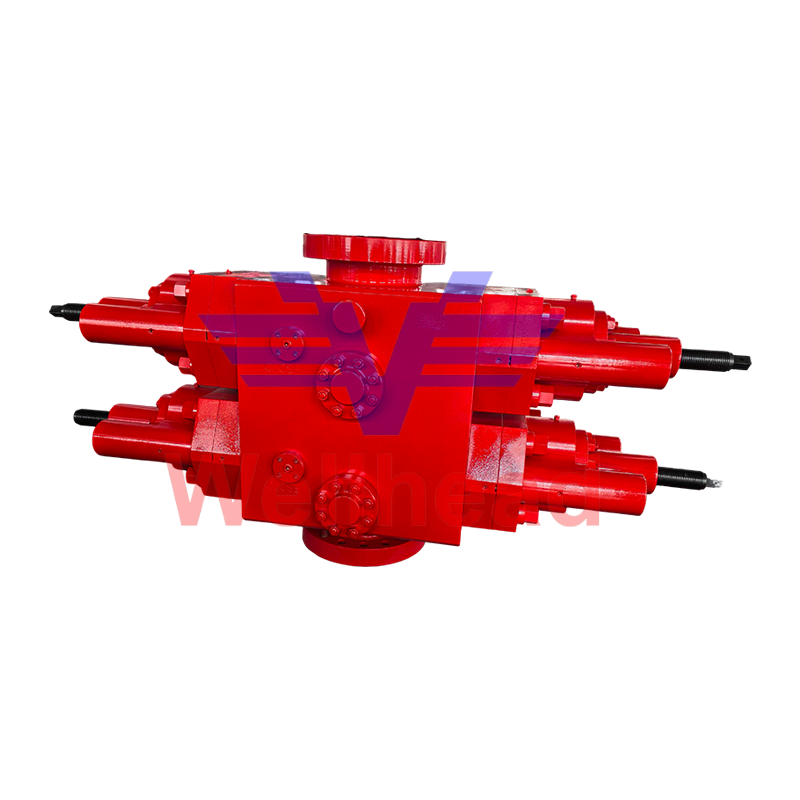
An annular blowout preventer is typically the first BOP element to close around drill pipe, casing, or even a wireline. Because it can seal on a wide range of pipe sizes and shapes, it gives the crew the fastest response when a kick reaches the wellhead. Once the annular element closes, the crew can shift to ram BOPs for a more durable seal while they circulate the influx out of the wellbore.
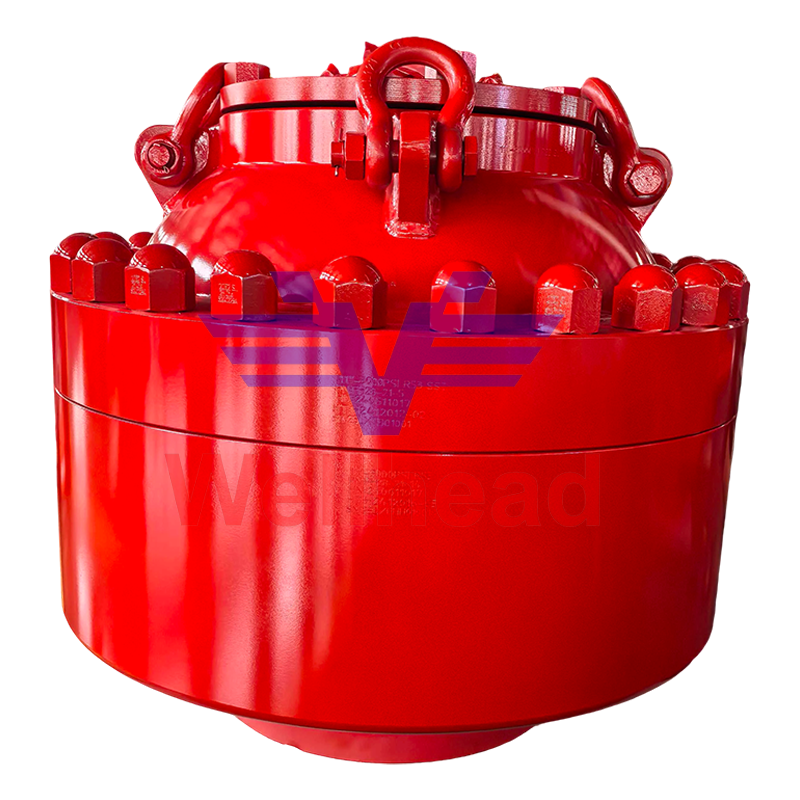 Annular Blowout Preventer for Rapid Well ControlThis annular BOP provides a fast-acting seal around various pipe sizes and shapes, making it the first line of defense when a kick reaches the wellhead. Durable construction and intelligent monitoring support reliable operation in high-pressure, high-temperature drilling environments.View Product →
For the equipment to perform when it matters, it has to be maintained and pressure-tested at regular intervals. BOPs are tested at the surface, in the stack, and after any major service event. The test results verify that the sealing elements, hydraulics, and control systems meet the working-pressure rating of the wellhead system.
Critical Equipment in Blowout Prevention
A modern drilling operation depends on a coordinated set of pressure-control equipment. Each component has a specific role in detecting, containing, or circulating out a kick. The following table summarizes the main equipment families and the API standards that govern them.
| Equipment | Function | API Standard |
|---|---|---|
| Annular BOP | Seals around drill pipe, casing, or open hole for fast well closure | API 16A |
| Ram BOP | Seals around a specific tubular size or shears the pipe completely | API 16A |
| Choke manifold | Controls well pressure while circulating kick fluids out of the wellbore | API 16C |
| Kill manifold | Pumps heavy fluid into the well at controlled rates and pressures | API 16C |
| Wellhead and X-mas tree | Provides the pressure boundary and production control at the surface | API 6A |
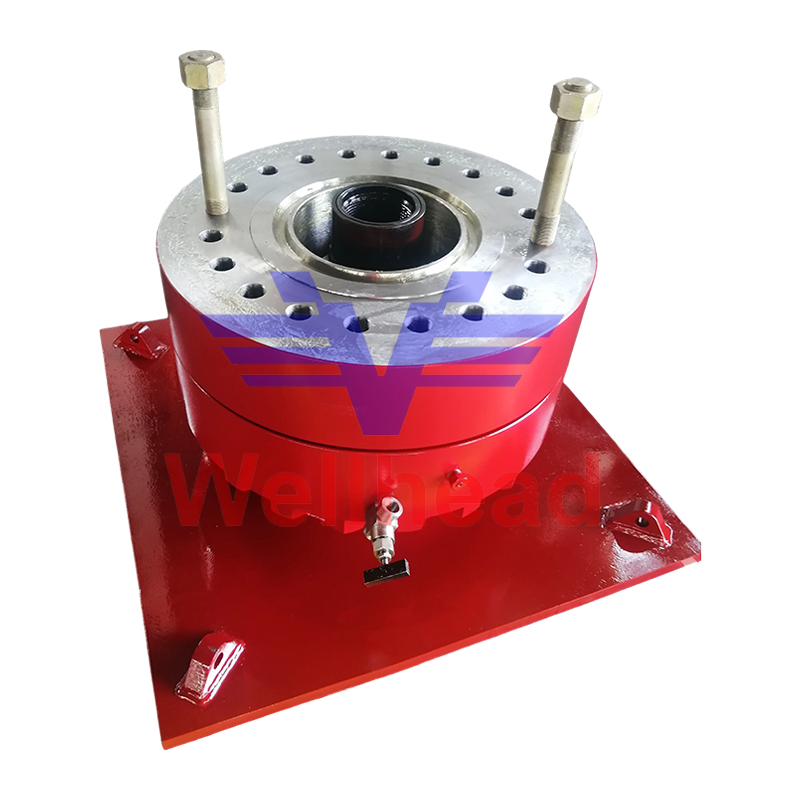
| BOP test stump | Simulates wellhead conditions to verify BOP sealing performance | API 16A |
The choke manifold is the tool the crew uses to relieve pressure and circulate out an influx without losing control of the well. Modern choke manifolds are built from API 16C components, with multiple choke valves, isolation valves, and pressure gauges arranged so that flow can be directed through a selected choke without shutting down operations. The kill manifold works in the opposite direction, allowing heavy mud to be pumped directly into the well while the choke manifold handles the returning flow.
 Choke Manifold for Precise Wellbore Pressure ControlA modern choke manifold built from API 16C components enables controlled circulation of kicks and pressure relief during well-control operations. Multiple choke and isolation valves allow flow direction without shutting down, helping crews maintain well integrity while circulating out influxes.View Product →
Above the BOP stack sits the wellhead and production tree, which carry the pressure load of the well during drilling, completion, and production phases. A wellhead assembly connects the casing strings to the surface and provides a solid foundation for the BOP stack during drilling and for the X-mas tree during production. When operators choose a full wellhead package from a single manufacturer, component interfaces, pressure ratings, and material specifications align without adaptation issues.
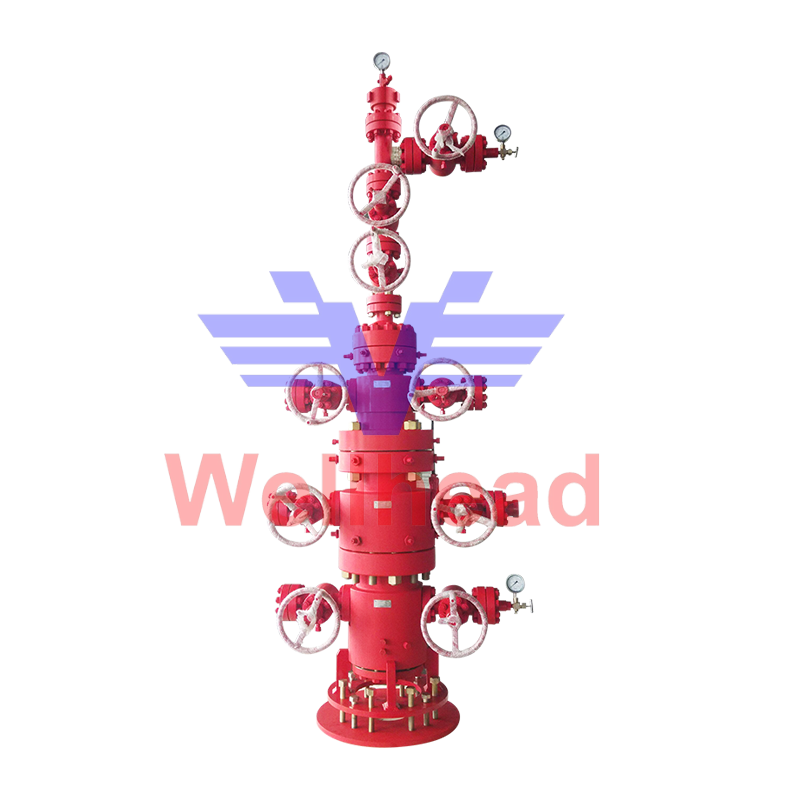 Wellhead and Christmas Tree Assembly for Production IntegrityThis integrated wellhead and X-mas tree assembly connects casing strings to surface equipment and provides safe production control. High-strength, corrosion-resistant materials and customizable configurations support reliable monitoring and flow management across various oil and gas well conditions.View Product →
What to Consider When Buying Blowout Prevention Equipment
Start with certification, then move to ratings and manufacturing quality. Buyers should verify that the supplier holds API monogram licenses for the relevant product standards, such as API 16A for BOPs and API 16C for manifolds, and that the manufacturing plant operates under API Q1 quality management. Certification is not a marketing feature; it is evidence that the equipment was designed, tested, and documented according to an audited quality system.
After certification, focus on the material and service ratings. Equipment used in sour wells must be ordered in hydrogen-sulfide-compatible material trims, and working pressure ratings must match or exceed the worst-case shut-in pressure of the well. Temperature ratings matter in both high-temperature and arctic environments. For a drilling package, also confirm that the choke manifold has enough flow capacity and that all connections match the BOP stack flange ratings.
Third, evaluate test and acceptance procedures. Before a BOP stack is sent back to the rig, it needs to be proof-tested under simulated wellhead conditions on a BOP test stump. Ask the supplier for the test reports, pressure charts, and seal certification that come with each unit. Finally, consider the supplier's experience and service support. A manufacturer that produces the wellhead, BOP, manifolds, and high-pressure fittings in one facility simplifies interface compatibility, spare parts, and warranty responsibility.
- Verify API monogram licenses and API Q1 certification for the manufacturing facility.
- Match working pressure and temperature ratings to the well's worst-case expected conditions.
- Select material trims that are compatible with sweet, sour, or high-CO2 service.
- Require documented pressure tests, seal reports, and material traceability for every unit.
- Prefer a supplier that can provide the full wellhead and pressure-control package with a single warranty.
Frequently Asked Questions
Can a blowout only happen during drilling?
No. Blowouts also occur during completion, workover, and production whenever barriers are removed or compromised, such as during well interventions, tubing removal, or subsurface safety-valve failure. The pressure-control equipment and procedures are different at each stage.
What is the difference between a kick and a blowout?
A kick is an influx of formation fluid into the wellbore that is still controllable with the mud system or BOP stack. A blowout occurs when those barriers are overwhelmed, fail, or are never activated, allowing fluid flow to reach the surface, seabed, or another formation.
How quickly can a blowout develop?
Depending on the formation permeability, well depth, and mud system, a kick can escalate into a blown-out well in ten minutes or less. This is why kick detection and automated BOP response times are critical design targets in modern drilling systems.
Are blowouts still a real risk in modern wells?
Yes, they remain rare, but the consequence level is so high that the industry still treats them as the defining risk of drilling operations. Consistent equipment testing, well control training, and adherence to API standards are the measures that keep blowout frequency low.
 + 86-0515-88429333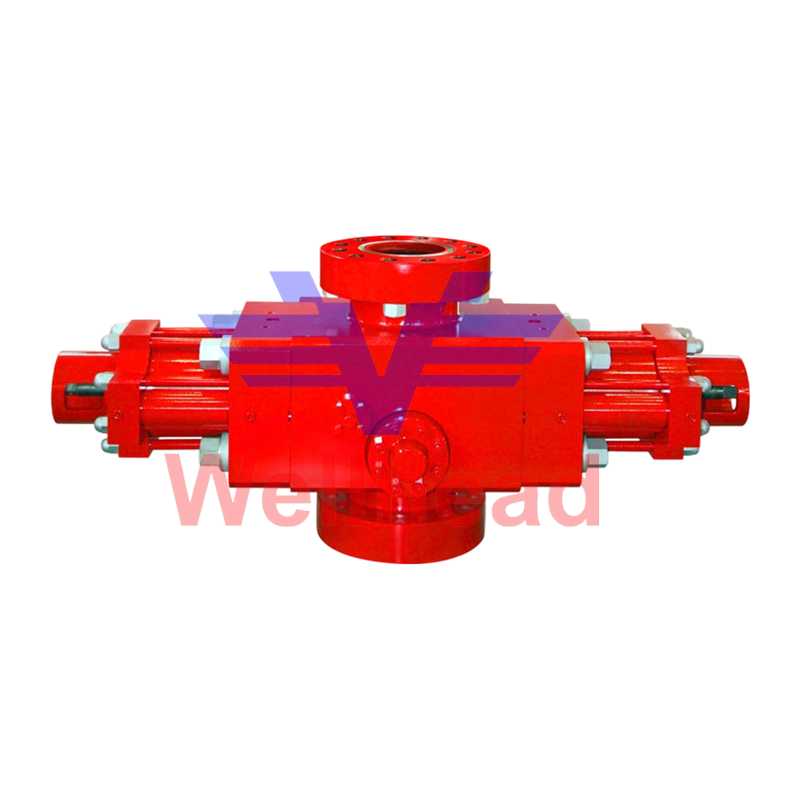


 CONTACT US
