

 English
 русский
Content
What Is BOP in Oil and Gas?
In oil and gas, BOP stands for Blowout Preventer — a safety-critical assembly of valves mounted on the wellhead that seals, controls, and monitors the well when formation pressure threatens to escape. Simply put, it is the last mechanical barrier between a manageable drilling operation and an uncontrolled blowout.
A blowout occurs when formation pressure exceeds the hydrostatic pressure of the drilling mud. Before any other equipment can react, the BOP physically closes the wellbore — around the drill pipe, over an open hole, or directly through the pipe itself — to regain pressure control and protect the crew, rig, and environment.
Modern blowout preventers are not single valves. They are engineered packages that combine a lower stack bolted to the casing head, an upper stack, hydraulic control systems, and remotely operated panels. Their role extends beyond drilling: BOPs also safeguard well completion, workover, and intervention operations.
How Does a Blowout Preventer Work?
The short answer: a BOP works by using hydraulic pressure to force a sealing element — either a flexible rubber ring or hardened steel rams — across the wellbore. When a kick is detected, the driller activates the closing unit, the accumulator releases stored hydraulic energy, and the rams or annular element seal the well within seconds.
The sequence in practice:
- The rig crew detects an influx of formation fluid by monitoring pit volume and flow-out versus flow-in.
- The crew closes the annular BOP first because its elastomer can seal around any shape of drill string.
- If the leak is not contained, pipe rams close around the drill pipe, and the choke manifold routes the kick through adjustable chokes to control pressure.
- If the well must be shut in completely and the pipe is in the hole, shear rams cut the drill pipe and seal the open hole below.
Speed matters. Kick detection to full shut-in typically takes two to five minutes on a modern rig, and a properly maintained BOP stack must close reliably during that window every time.
The Main Types of Blowout Preventers
There are two fundamental categories: annular BOPs and ram BOPs. Most surface stacks include at least one annular preventer on top of two or more ram preventers so the assembly can handle both routine and emergency situations.
Annular BOP
An annular BOP uses a reinforced rubber packing element that is squeezed inward by hydraulic pistons to seal tightly around any geometry — drill pipe, tubing, casing, kelly, or even nothing at all. Because the element can open and close while pipe is moving, it is ideal for stripping operations and is always the first to be closed during a kick.
Operators working harsh drilling environments often choose an annular blowout preventer with pressure ratings up to 15,000 psi. Meanwhile, annular BOP technology continues to evolve in packing-element life and closing speed, but the working principle has stayed the same for decades: a circular bladder that closes from all directions around the pipe.
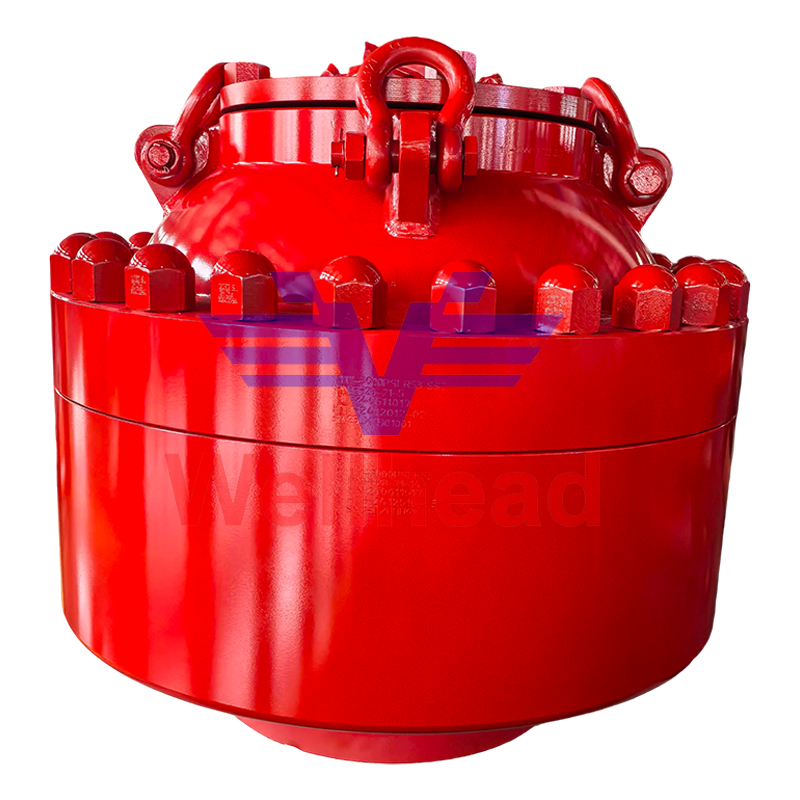 Annular BOP Suppliers, Custom Annular BOP Company - Jiangsu Wellhead Drilling EqJiangsu Wellhead Drilling Equipment Co., LTD is China Annular BOP suppliers and Annular BOP company, We specialize in production custom A...View Product →
Ram BOP
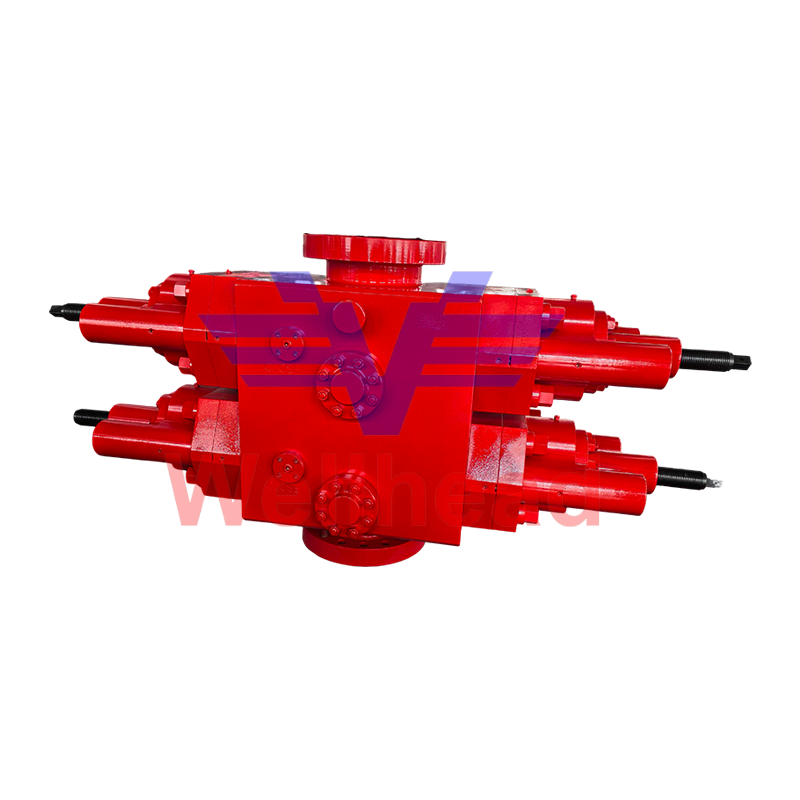
Ram BOPs close with two opposing steel blocks — the rams — that slide horizontally across the wellbore and lock in place. They provide greater shut-off integrity than annulars and are the only design that can shear pipe. Common configurations include:
- Pipe rams — seal around a specific drill pipe size.
- Blind rams — seal an empty wellbore when no pipe is in the hole.
- Shear rams — physically cut the drill pipe and seal below it.
- Blind-shear rams — combine shearing with a blind seal in one unit.
Rams are usually stacked. A single unit suits simple servicing operations, while double or triple stacks provide redundancy for higher-risk drilling. Rig crews regularly inspect the materials used in ram BOP construction because the sealing surfaces are exposed to abrasion from mud solids, cuttings, and H2S-laden fluids. For most workover and light drilling programs, a single ram blowout preventer with flanged end connections is a dependable starting point.
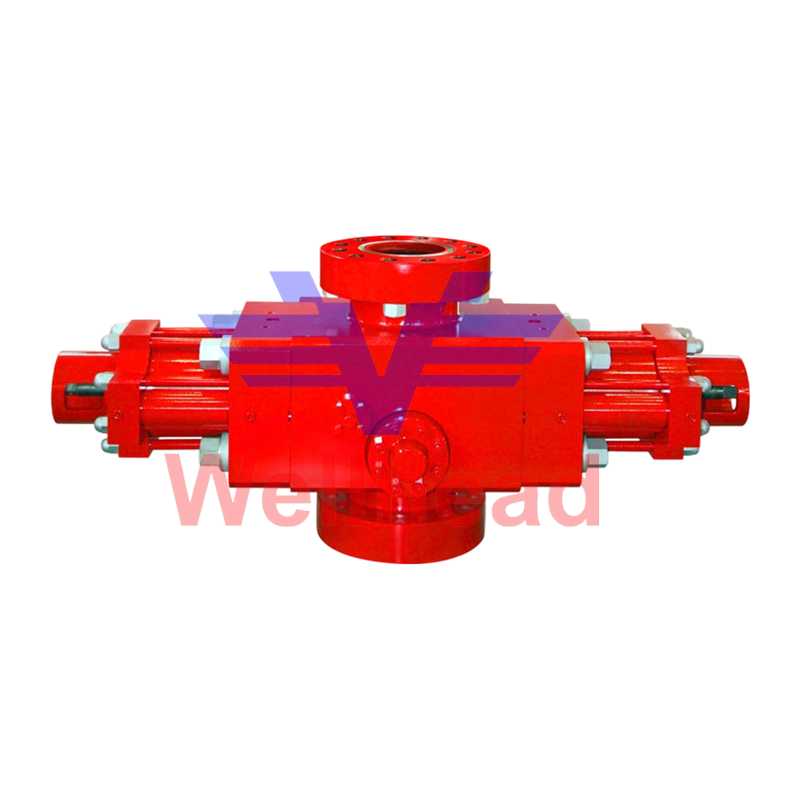 Single Ram BOP Suppliers, Custom Single Ram BOP Company - Jiangsu Wellhead DrillJiangsu Wellhead Drilling Equipment Co., LTD is China Single Ram BOP suppliers and Single Ram BOP company, We specialize in production cu...View Product →
| Feature | Annular BOP | Ram BOP |
|---|---|---|
| Sealing element | Reinforced rubber packing unit | Steel rams with elastomer seals |
| Seals around drill pipe | Yes — any diameter within range | Yes — one pipe size per ram |
| Seals open hole | Yes | Yes, with blind or shear rams |
| Can shear drill pipe | No | Yes, with shear rams |
| Typical working pressure | Up to 15,000 psi | Up to 15,000 psi; some 20,000 psi designs |
| Best used for | First response, stripping, varied tools | Positive shut-in, cutting, long-term closure |
In practice, the two are complementary: the annular handles the unexpected, and the ram stack provides the certain shut-in.
Key Components of a BOP Stack
A blowout preventer system is more than the ram and annular bodies. It is an integrated pressure-control loop that includes the stack, a high-pressure accumulator, choke and kill lines, and a test stump.
- BOP stack — the assembled annular and ram preventers mounted above the casing head.
- Accumulator unit — compressed-gas bottles that store hydraulic energy so the BOP can close even if rig power is lost.
- Choke manifold — adjustable chokes that bleed off well pressure in a controlled way during a kick.
- Kill line — a high-pressure line used to pump mud back into the well below the BOP.
- Test stump — a stub with outlet holes that simulates the wellhead for pressure and function testing of the stack.
Every component in this loop must match the rated working pressure of the stack. A single undersized valve can turn a controllable kick into an uncontrolled surface release.
BOP Standards, Testing, and Maintenance
The governing industry specification for blowout preventers is API 16A, which covers design, materials, pressure ratings, and testing for drilling and well-servicing equipment. Any serious procurement decision should require API-monogrammed equipment, traceable material certificates, and documented hydrostatic tests.
Testing is where most failures are caught. Function tests verify that each BOP opens and closes within its rated closing time; pressure tests verify that the seal holds at rated working pressure. On most surface drilling operations, BOP stacks are function-tested every 7 days and pressure-tested at intervals defined in the operator's well-control plan. That is why a reliable BOP test stump rated to the stack's working pressure is a practical investment on every rig. As the role of the BOP test stump in preventing blowout-related failures makes clear, a preventer that has never been verified under real closing conditions is only a piece of bolted metal.
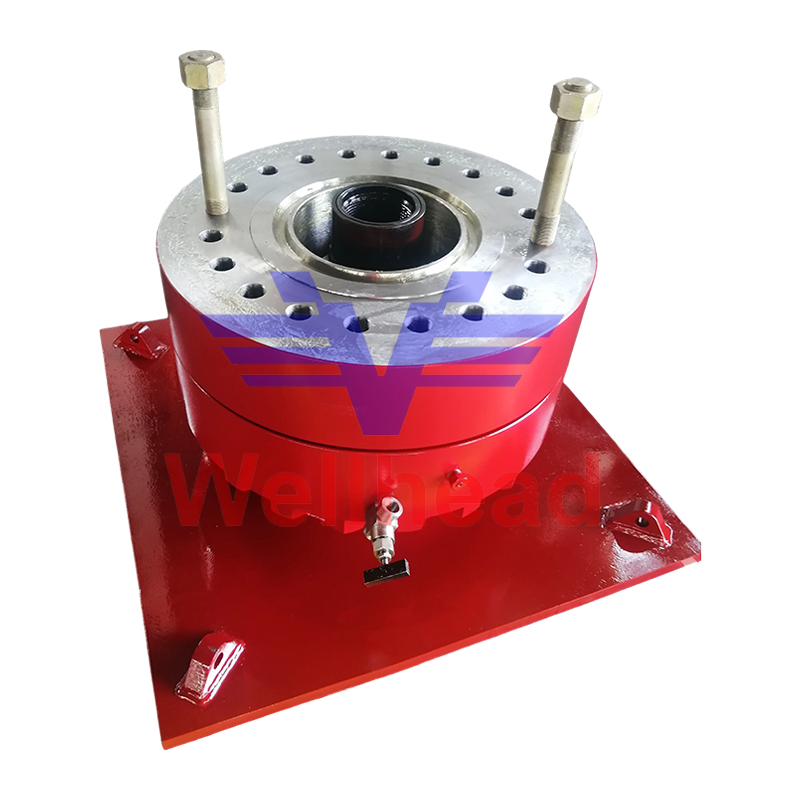 BOP Test Stump Suppliers, Custom BOP Test Stump Company - Jiangsu Wellhead DrillJiangsu Wellhead Drilling Equipment Co., LTD is China BOP Test Stump suppliers and BOP Test Stump company, We specialize in production cu...View Product →
Maintenance follows the same logic. Packing elements and ram seals are wear items with documented service life; they must be replaced before failure, not after. H2S service requires temperature-derated elastomers and corrosion-resistant trim. A BOP that sits unused for two years is not ready for the next well without a full recertification.
How to Choose the Right Blowout Preventer
Start with the well's maximum expected surface pressure, then verify three decisions: the pressure rating, the closure capability, and the supplier's API compliance.
Pressure rating is the non-negotiable metric. Typical ratings are 3,000, 5,000, 10,000, and 15,000 psi. A 5,000 psi stack on a well that calls for 10,000 psi protection is not a cost saving; it is a hazard. The closure capability is the second decision: single or double ram, which pipe sizes to fit, and whether shear rams are required by the drilling program. The third is traceability. For every stack, demand API monogram documentation, material certs, a written test report, and confirmation that the manufacturer holds active API 16A and API Q1 licenses.
Experience profile matters in practice. A manufacturer with two decades of production history — certified under API Q1, API 6A, API 16A, and API 16C — will typically deliver more reliable stack configurations than one built only to order. Jiangsu Wellhead Drilling Equipment, for example, has supplied API-certified well-control equipment to CNPC, SINOPEC, and CNOOC programs for 19 years, which is the kind of field-backed track record worth auditing before purchase.
Practical selection checklist:
- Confirm the rated working pressure and temperature class of each component.
- Match ram sizes to the drill pipe and casing diameters in the well program.
- Verify API 16A monogram and independent test certificates before payment.
- Ask for spare sealing elements and documented replacement schedules.
- Plan accumulator bottle capacity so all BOPs can close within rated time with reserve energy.
BOP in Oil and Gas: Frequently Asked Questions
What does BOP stand for in oil and gas?
BOP stands for Blowout Preventer, a high-pressure valve system installed on the wellhead to seal, control, and monitor the well during drilling, completion, and intervention operations.
What is the difference between annular and ram BOPs?
An annular BOP uses a rubber element to seal around any pipe geometry and is usually closed first. A ram BOP uses steel rams that seal around a fixed pipe size or close an empty wellbore, and it can shear pipe when equipped with shear rams.
Why is the BOP the most important safety equipment on a rig?
Because it is the only equipment that can directly shut in a well after a kick. The 2010 Gulf of Mexico disaster showed how catastrophic a failed or mismatched BOP can be; a functioning BOP is the difference between a controlled well and a blowout.
What pressure rating should a BOP have?
At minimum, the BOP rating should exceed the maximum anticipated surface pressure of the well. Common ratings are 3,000 to 15,000 psi, and the weakest component in the stack — including flanges, valves, and the test stump — sets the true limit.
Can the same BOP be used for land and offshore wells?
The same working principles apply, but offshore subsea BOPs are larger, use remotely operated control pods, and must withstand deep-water hydrostatic loads. Land operations typically use surface stacks that are easier to inspect and test at shorter intervals.
The Bottom Line
BOP in oil and gas is shorthand for the Blowout Preventer, the definitive barrier against uncontrolled well pressure. Understanding how annular and ram preventers work together, what standards govern their manufacture, and how testing keeps them reliable is the fastest way to avoid costly — and dangerous — procurement mistakes.
For operators selecting well-control equipment, the rule is simple: specify the pressure rating correctly, buy from an API-certified manufacturer, close the stack on a test stump before it goes to the well, and treat every seal and ram as a critical wear component. Get those fundamentals right, and the BOP will do exactly what it was built to do.
 + 86-0515-88429333


 CONTACT US
