

 English
 русский
A blowout is the uncontrolled release of crude oil, natural gas, or drilling fluids from a well after its pressure control systems have failed. It represents the complete loss of well control and is the most dangerous event in oil and gas drilling, capable of causing fatalities, destroying the rig, and releasing large volumes of hydrocarbons into the environment.
For drilling engineers, wellsite supervisors, and procurement teams, understanding how blowouts develop and which barriers stop them is essential for safe operations. This guide covers the definition, causes, escalation sequence, and the API-certified equipment used to prevent uncontrolled releases from oil wells.
Content
- What Defines an Oil Well Blowout?
- Why Do Oil and Gas Well Blowouts Occur?
- How a Kick Escalates into a Blowout
- Well Control Equipment That Stops a Blowout
- Standards and Buying Considerations for Blowout Control Equipment
- Testing and Maintenance That Keep Barriers Reliable
- Frequently Asked Questions About Oil Well Blowouts
What Defines an Oil Well Blowout?
An oil well blowout is defined by the total loss of control over wellbore fluids. Formation pressure exceeds the hydrostatic pressure of the mud column, and the blowout preventer stack fails to contain the resulting inflow, so oil, gas, or salt water flows out of the well in an uncontrolled manner. The flow path determines the type and severity of the event.
Blowouts fall into three categories:
- Surface blowouts - formation fluids reach the surface through the wellbore or around the rig floor and frequently ignite, creating a fire that is extremely difficult to extinguish while the well remains open.
- Subsea blowouts - fluids escape from a subsea wellhead or the seabed during offshore drilling, producing underwater plumes that complicate containment and intervention.
- Underground blowouts - fluids flow from a deeper zone into a shallower, weaker formation; the movement is hidden below ground, which makes detection slow and response complex.
Why Do Oil and Gas Well Blowouts Occur?
Blowouts occur because formation pore pressure rises above the pressure the wellbore can exert, and the well's defenses fail to rebalance the system. Most incidents involve a combination of geological conditions, operational mistakes, and equipment deficiencies rather than a single isolated cause.
| Cause | What happens | Primary defense |
|---|---|---|
| Insufficient mud weight | Hydrostatic head cannot balance pore pressure, so formation fluids enter the wellbore. | Mud program designed from pore pressure data and verified daily. |
| Lost circulation | Drilling fluid escapes into fractures or vugs, lowering the fluid column and hydrostatic pressure. | Lost-circulation material, proper casing setting depth, managed ECD. |
| Swabbing during tripping | Pulling pipe creates suction that draws formation fluids into the well. | Controlled tripping speed, trip tank monitoring, keeping the hole full. |
| Equipment failure | BOP seals, rams, or wellhead components fail when the well is shut in. | Pressure testing, scheduled elastomer replacement, verified API certification. |
| Delayed or wrong crew response | Kick signs are missed or the shut-in procedure is executed incorrectly. | Well control training, regular drills, clear decision checklists. |
A blowout is always preceded by a kick - an influx of formation fluids that the well's barriers can still contain. The blowout happens only when the kick is not detected, not shut in, or not sealed. Kick detection speed and shut-in reliability are the two factors that most directly determine the outcome.
How a Kick Escalates into a Blowout
A kick escalates to a blowout in a predictable sequence. Understanding each step makes prevention possible.
- Formation fluid enters the wellbore. Pore pressure overcomes the hydrostatic pressure of the mud column, and gas, oil, or salt water begins to flow into the well.
- The crew detects the influx. Pit volume gain, increased return flow, or falling pump pressure alerts the driller. This is the point at which correct well control procedures can still stop the event.
- Shut-in is initiated. The BOP stack closes to isolate the well. If closure is timely and the seals hold, the kick is contained and can be circulated out through the choke manifold.
- Containment fails or response is too slow. If the BOP cannot close, the seal leaks under pressure, or the crew reacts late, fluids continue moving toward the surface.
- Uncontrolled flow develops. Hydrocarbons break through to the surface or migrate into another formation; fire, cratering, rig collapse, and environmental damage follow quickly.
Well Control Equipment That Stops a Blowout
Three coordinated equipment layers prevent a blowout: the drilling fluid system provides primary control, the BOP stack is the mechanical barrier, and the wellhead and flow-control equipment manage pressure after shut-in. When primary control fails, the condition and performance of the remaining layers decide the outcome.
Blowout Preventer Stacks
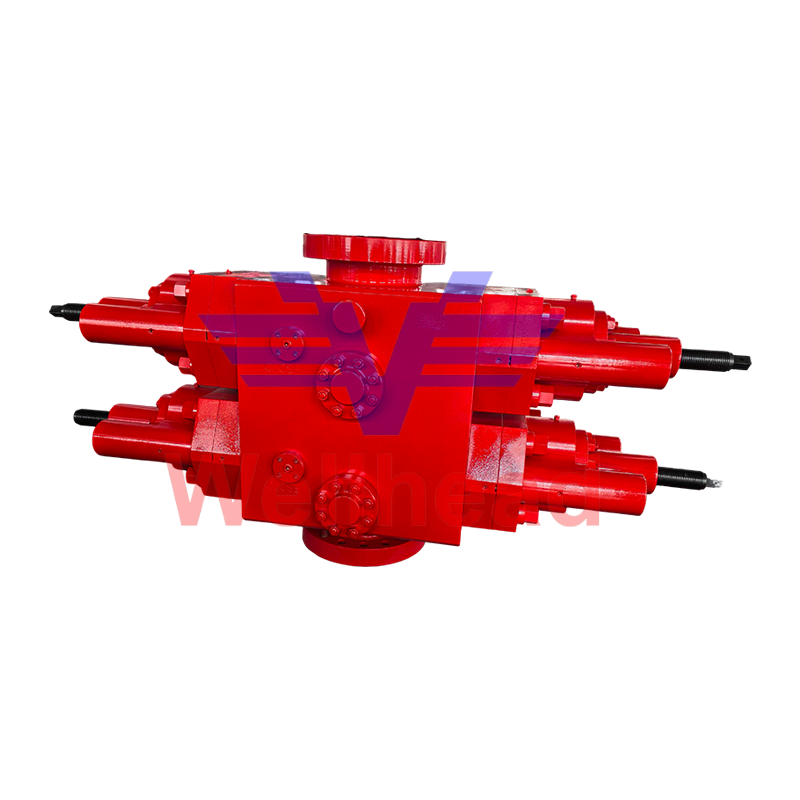
The BOP stack is the final mechanical line of defense. Annular preventers seal around any pipe shape or shut the open hole by compressing an elastomer pack; ram preventers deliver a rigid seal, with pipe rams closing around the drill pipe, shear rams cutting and sealing, and blind rams closing the open bore. The correct stack configuration depends on the maximum anticipated surface pressure, hole size, and rig type. API 16A certification is the baseline requirement.
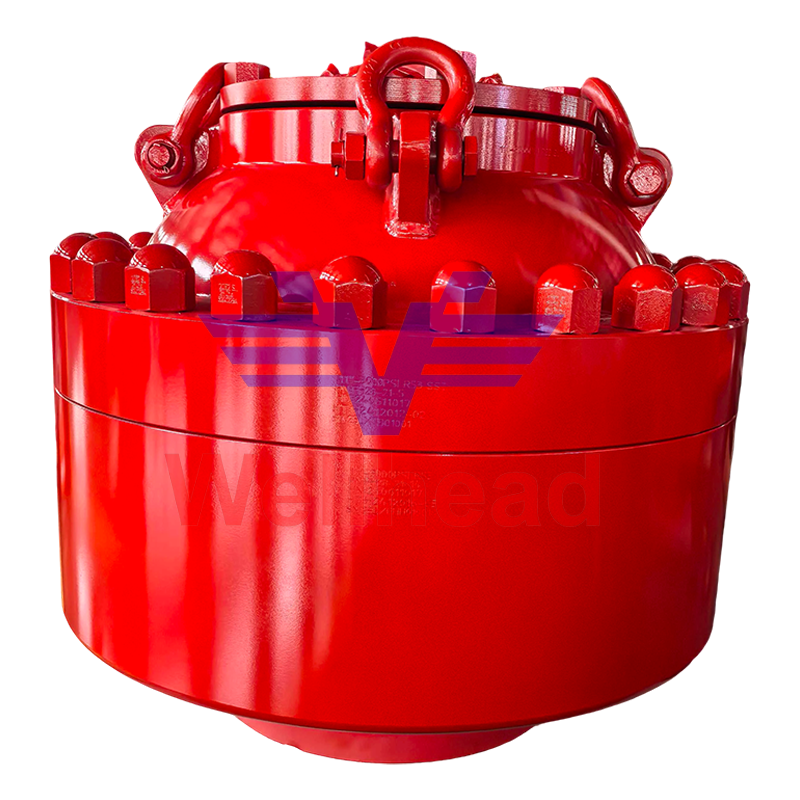 Annular Blowout Preventer with Intelligent Control SystemThis annular BOP provides a strong elastomer seal around varying pipe shapes and addresses the BOP stack requirement discussed above. Its durable construction and quick-response control system support safe sealing in demanding drilling conditions.View Product →
Choke and Kill Manifolds
After the BOP closes, the choke manifold becomes the control point. It routes well fluids through adjustable chokes that reduce pressure to manageable levels while heavy kill mud is circulated in, and the kill manifold provides a separate path for pumping kill fluids when the normal mud system is unavailable. Manifolds built to API 16C must match the expected pressure, flow, and erosion conditions.
 Choke Manifold for Wellbore Pressure ControlPositioned right after the BOP stack in the context, this choke manifold routes well fluids through adjustable chokes to regulate pressure during kill operations. It meets API 6A and NACE MR0175 specifications for reliable flow control.View Product →
Wellhead and Christmas Tree Equipment
The wellhead supports the casing strings and forms the pressure boundary between the well and the surface. Casing heads, tubing heads, and spools are chosen by casing program, working pressure, temperature rating, and material class. After drilling, the Christmas tree takes over as the production barrier. API 6A equipment with full material traceability is a prerequisite for safe well control at every stage.
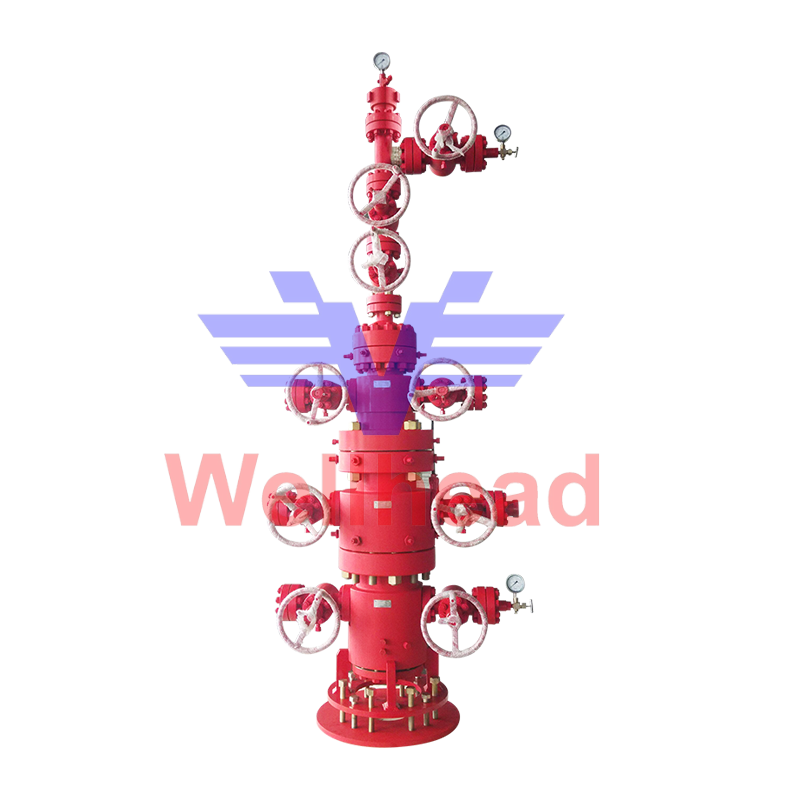 Wellhead and X-mas Tree Assembly for Production ControlThis integrated wellhead and Christmas tree assembly offers valve packages and instrumentation for safe flow control and monitoring. It forms the surface production barrier and is built with corrosion-resistant materials for long-term service.View Product →
Standards and Buying Considerations for Blowout Control Equipment
Acceptance of blowout prevention equipment by operators and regulators depends on conformance with API standards. Buyers should verify that the supplier holds API Q1 quality management certification plus the product monogram for the exact equipment category, and that its facility is regularly audited.
| Standard | Scope | Typical equipment |
|---|---|---|
| API 6A | Wellhead and Christmas tree equipment | Casing heads, tubing heads, spools, gate valves |
| API 16A | Blowout preventer equipment | Annular BOPs, ram BOPs, control units, test stumps |
| API 16C | Choke and kill systems | Choke manifolds, kill manifolds, related valves |
Certification is not a substitute for design verification. Procurement teams should compare the rated working pressure against the maximum anticipated wellhead pressure, confirm the temperature class and H2S service classification, review material mill certificates, and request factory acceptance test reports. For barrier equipment, the manufacturer's in-house capability also matters. A supplier that performs its own machining, welding, assembly, and pressure testing in one plant, such as Jiangsu Wellhead Drilling Equipment Co., Ltd., is easier to audit and generally faster on lead times than a reseller.
Testing and Maintenance That Keep Barriers Reliable
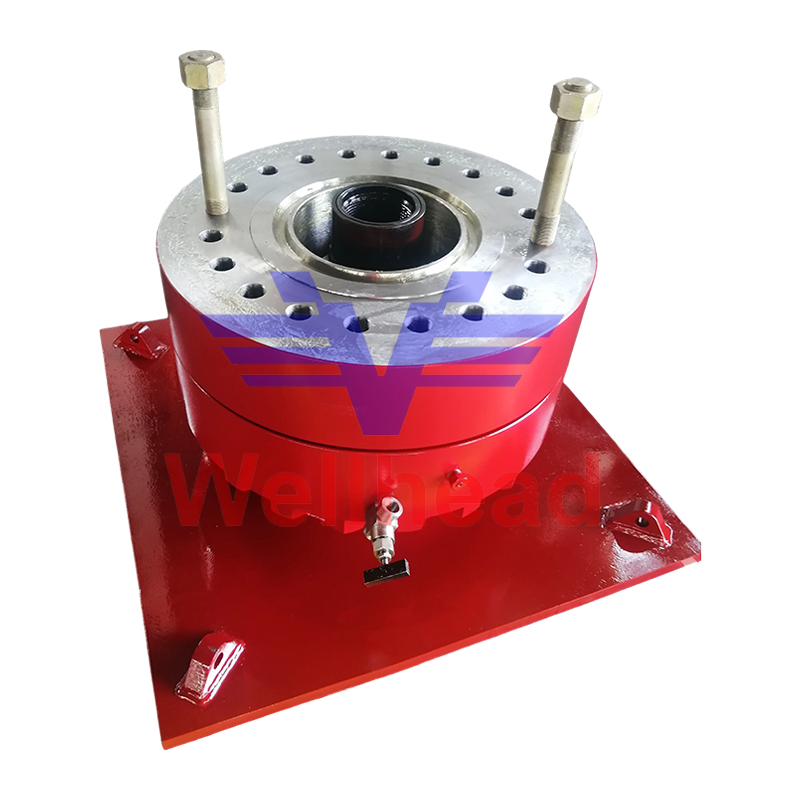
Well control equipment is only as reliable as its most recent test. BOP stacks are pressure tested periodically and after key events. Before installation, a BOP test stump brings the stack to its rated working pressure and verifies that annular elements and ram blocks seal correctly without putting the rig crew at risk.
Routine function testing should run alongside pressure tests: closing and opening each BOP element at low pressure, checking choke and kill manifold valves for smooth operation, inspecting elastomers for wear, and documenting every result. Elastomers exposed to high temperatures, H2S, or aggressive drilling fluids should be replaced on a calendar schedule rather than only after failure. A clean, repeatable test history is the strongest signal that the barrier system is ready for the next well.
Frequently Asked Questions About Oil Well Blowouts
What is the difference between a kick and a blowout?
A kick is an influx of formation fluids that is detected and contained while the well's barriers remain intact. A blowout is the failure to contain that influx, whether from late shut-in, a faulty BOP seal, or an incomplete closure.
Can an oil well blowout be stopped once it starts?
It can be, but only through high-risk operations such as capping stacks, pumping heavy kill fluids, or drilling relief wells, which can take weeks or months. That is why the industry concentrates on prevention and rapid shut-in: killing an active blowout is far harder than stopping the kick that precedes it.
What equipment is most important for preventing a blowout?
The BOP stack is the single most critical barrier because it is the only equipment that can physically close the well in the seconds between kick detection and loss of control. However, it cannot work alone: the choke and kill manifold, wellhead, and mud system must be designed, rated, and maintained as one integrated system.
A blowout is the total failure of well control, but it is a foreseeable failure. The industry has documented the warning signs, defined the causes, and built the equipment standards - API 6A wellheads, API 16A BOP stacks, and API 16C manifolds - that stop the escalation when selected, installed, and maintained correctly. For drilling teams and buyers, the practical takeaway is consistent: verify pressure ratings and certifications, treat every kick as a potential blowout, and keep every barrier tested and ready.
 + 86-0515-88429333


 CONTACT US
